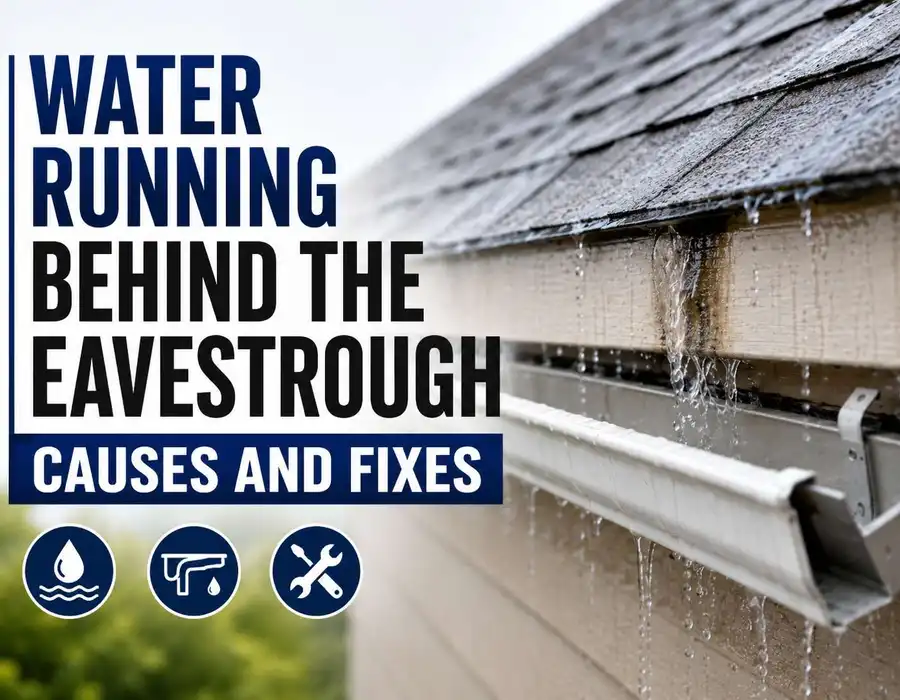
Water running behind the eavestrough means rain or melting snow is slipping between the roof edge and the gutter instead of draining through the system. In Barrie homes, this often comes from loose gutters, missing drip edge, bad slope, clogged troughs, ice damage, or fascia movement. Fixing it early with proper eavestrough repair protects wood, siding, and foundations.
Why Water Behind the Eavestrough Is a Serious Warning Sign
An eavestrough is a roof drainage channel that collects water from the roof edge and moves it away through downspouts. When it works well, water never touches the fascia board, siding, soffit, or foundation. It leaves the roof, enters the trough, travels to the downspout, and drains away from the house.
When water runs behind the eavestrough, that path breaks. Water may soak the fascia board, leak into the soffit, stain siding, or fall too close to the foundation. The damage often starts small. A homeowner may notice a drip line, peeling paint, or a damp spot near the wall. Over time, the same leak can rot wood, pull fasteners loose, and create entry points for pests.
Barrie and Simcoe County homes face added stress because roof drainage changes with the season. Heavy rain, freeze-thaw cycles, packed snow, and ice at the roof edge can all test the gutter system. A minor gap in July can become a larger leak after winter because ice can lift, bend, or loosen parts of the eavestrough.
The key is to find where the water path is failing. Water behind the trough is not always a “gutter problem.” It may be a roof-edge problem, a fascia problem, a slope problem, or a clog problem. The right fix depends on the cause.
The Most Common Causes of Water Running Behind the Eavestrough
Water does not run behind an eavestrough for one reason only. It happens when the roof edge and gutter no longer meet in the right position. The sections below explain the main causes and how each one creates the leak.
1. The Eavestrough Is Pulled Away from the Fascia
The fascia is the vertical board behind the eavestrough. It supports the gutter and closes the lower edge of the roof. If the trough pulls even a small distance away from the fascia, water can slip through the gap.
This often happens when fasteners loosen. Old spikes, weak screws, rotting fascia, heavy ice, and packed debris can all pull the trough forward. Once the gutter sags, the back edge no longer sits tight against the roofline. Rainwater follows gravity, curls under the shingle edge, and drops behind the trough. This is exactly the mechanism behind most sagging eavestroughs — the two problems usually show up together.
You may notice this problem from the ground. Look for sections where the gutter face tilts forward, hangs lower than nearby sections, or shows a dark line between the gutter and fascia. During rain, water may fall in a sheet behind one area instead of entering the trough.
The fix is not just pushing the trough back. The fasteners must hold into solid material. If the fascia is soft or rotted, new screws may fail quickly. In that case, the damaged wood needs repair before the gutter is re-secured.
2. There Is No Drip Edge or It Was Installed Wrong
A drip edge is a metal flashing strip installed along the roof edge. Its job is to guide water off the shingles and into the eavestrough. It also helps stop water from curling under the roof edge and soaking the fascia.
Without a proper drip edge, water can cling to the underside of the shingle and travel backward. This is called surface tension. Instead of dropping cleanly into the gutter, the water wraps around the roof edge and falls behind the trough. This is common on older homes or roofs where the edge flashing was skipped, bent, cut short, or covered poorly — often a sign that the original eavestrough installation skipped this detail.
In Barrie, missing or weak drip edge can become more noticeable in spring. Snow melts slowly at the roof edge, and water may run for hours. If there is no metal lip to direct that water, it can soak the wood behind the eavestrough again and again.
A correct fix may involve adding or replacing drip edge flashing. The metal must sit so roof water is directed into the trough, not behind it. Caulking the gap is not a reliable long-term fix because caulk can crack, shrink, or trap water where it should be draining.
3. The Gutter Is Too Low for the Roof Edge
The eavestrough must sit close enough to the roof edge to catch water as it leaves the shingles. If the gutter is mounted too low, fast-moving rainwater can overshoot the back edge or hit the front lip and spill in the wrong direction.
This can happen after a poor installation, roof replacement, fascia repair, or gutter adjustment. A steep roof makes the problem worse because water leaves the roof with more speed. During light rain, the system may seem fine. During a storm, water may shoot past the trough or splash behind it.
A gutter that sits too low may also leave the roof edge exposed. From the ground, you may see a large space between the bottom of the shingles and the top rear edge of the eavestrough. During rain, the water may not enter the gutter cleanly.
The fix is to reset the gutter height. The back of the trough should sit where the roof edge can feed water into it. This must be balanced with winter performance. If the gutter is set too high, sliding snow and ice may strike it and bend it. A good installation accounts for both rain flow and snow load.
4. The Eavestrough Slope Is Wrong
Eavestrough slope is the slight angle that moves water toward the downspout. A gutter may look level, but it needs a small pitch to drain. If the slope is wrong, water can pool, overflow, and leak behind the trough.
Poor slope causes two problems. First, standing water adds weight. That weight can pull the trough away from the fascia. Second, pooled water can rise near the back edge and spill behind the gutter during heavy rain. In winter, that pooled water can freeze, expand, and push the trough out of shape.
A slope problem often shows up after the rain stops. If water remains in the gutter long after a storm, the pitch may be wrong. You may also see overflow near the middle of a run instead of near the downspout.
The fix is to re-pitch the eavestrough. This means adjusting the hangers so water moves toward the downspout without leaving low spots. Long gutter runs may need more than one downspout because a single outlet may not drain fast enough.
5. Clogs Are Forcing Water Backward
Leaves, pine needles, seed pods, roof grit, and shingle granules can block the flow inside the gutter. Once water cannot move to the downspout, it rises. When it reaches the back edge, it may spill behind the eavestrough.
A clog can also hide inside the downspout. The gutter may look fairly clean from above, but water still backs up because the outlet is blocked. In that case, rain fills the trough like a bathtub with a plugged drain.
This is common in areas with mature trees. In Barrie neighbourhoods with maple, birch, pine, or cedar nearby, debris can build up fast in fall and spring. Roof valleys can also dump a large amount of water and debris into one short gutter section.
The fix is to clean the trough and flush the downspouts. If clogs keep returning, gutter guards may help, but they must match the roof and tree conditions. A guard that handles leaves may still struggle with pine needles or fine roof grit. The goal is not just covering the gutter; it is keeping water moving during real storms.
6. Ice Dams Are Pushing Water Behind the Gutter
An ice dam is a ridge of ice that forms near the roof edge and blocks melting snow from draining. Water backs up behind the ice and may find gaps under shingles, behind fascia, or around the eavestrough. Our full guide to snow and ice damage to eavestroughs covers how this cycle starts and how to break it.
Ice dams form when warm air escapes into the attic, heats the roof deck, and melts snow from below. The meltwater runs down to the colder roof edge, where it freezes. Over time, ice builds up. The gutter may fill with ice, bend under the weight, or pull away from the fascia. When thawing starts, water may run behind the trough instead of into it.
This is a major concern for homes in Barrie because winter conditions can shift from freezing to thawing and back again. That cycle makes small roof-edge problems worse. A gutter that worked in summer may leak badly after ice has moved it even half an inch.
The fix may include removing ice safely, repairing the gutter, and solving the attic heat-loss issue. More insulation, better air sealing, and proper ventilation can reduce roof melt. Fixing only the gutter may not stop the problem if the roof keeps creating ice dams every winter.
7. The Fascia Board Is Rotted or Warped
If the fascia board is rotted, bowed, or soft, the eavestrough cannot stay tight. Even strong hangers need solid backing. When the wood weakens, the fasteners loosen and water finds a path behind the trough.
Rot often starts because of old leaks. Water gets behind the gutter, wets the fascia, and dries slowly. Paint peels. Wood fibers soften. The gutter pulls farther away. Then more water gets in. This creates a cycle where the leak feeds the damage and the damage makes the leak worse.
Signs of fascia trouble include peeling paint, dark stains, soft spots, visible cracks, sagging gutter sections, or insects near the roof edge. In some cases, the fascia looks fine from the ground but feels soft when touched.
The fix is to replace damaged fascia and then reinstall the eavestrough correctly. Covering rotten wood with metal or sealing the outside may hide the issue, but it does not restore strength. The gutter needs a solid base to hold its shape through rain, snow, and ice.
8. Roof Shingles Do Not Extend Far Enough
Shingles should extend far enough past the roof deck to let water drop into the eavestrough or onto the drip edge. If shingles are cut too short, water may leave the roof too far back and run behind the gutter.
This can happen during roof replacement. If the old roof had a different edge detail, or if the new shingles were trimmed tightly, the water path may change. The gutter may be in the same place as before, but the roof edge no longer feeds it properly.
This issue can be hard to see from the ground. A close roof-edge check is often needed. The signs are similar to a drip edge issue: wet fascia, water behind the trough, and staining under the roof edge.
The fix depends on the roof condition. Sometimes proper drip edge flashing can correct the water path. In other cases, the shingle edge may need roofing work. The important point is that the eavestrough cannot catch water that never reaches it.
9. The Eavestrough Is Too Small for the Roof Area
A gutter can be installed well and still fail if it is too small for the roof area it serves. Large roof planes, steep pitches, metal roofs, and valleys can send water into one section faster than the trough can carry it away.
When water volume is too high, the gutter fills and spills. It may overflow at the front, but it can also spill at the back, especially if the back edge is lower or there is a gap near the fascia. This may only happen during heavy storms, which makes the problem easy to miss during a quick inspection.
Homes with additions can develop this issue. A new roof section may drain into an old gutter run that was sized for a smaller roof. The downspout may also be too few, too narrow, or poorly placed.
The fix may include larger eavestroughs, added downspouts, better outlet placement, or redirecting roof valleys — in practice, this usually means a proper eavestrough replacement rather than another patch. The goal is to match the drainage system to the amount of water the roof actually sheds.
10. Poor Sealing at Corners, End Caps, or Mitres
Water behind the eavestrough may seem like a full gutter problem, but sometimes it starts at a joint. Corners, end caps, and mitres are common leak points because they rely on sealant and proper alignment — see our dedicated guide on why eavestroughs leak at the corner for the full breakdown.
When a corner leaks, water can run along the back of the trough or fascia before dropping. This makes the leak look like it is coming from a different spot. Wind can also push water backward during storms, making joint leaks harder to trace.
A failed sealant joint may show rust marks, dirty streaks, or dripping from one corner. On aluminum systems, the sealant may dry out, split, or separate from the metal.
The fix is to clean and reseal the joint with the right gutter sealant. If the corner is bent or poorly fitted, sealant alone may not last. The joint must be aligned so water flows through it without pooling.
How to Find the Exact Cause
Start by watching the system during steady rain from a safe spot on the ground. Notice where the water first appears. Does it come from one short section, the full roof edge, a corner, or near a downspout? A single drip point often suggests a joint, fastener, or clog. A long wet line often points to missing drip edge, poor gutter position, or fascia movement.
Next, check after the rain. Water sitting inside the trough can reveal a slope or clog problem. Stains on the fascia may show that water has been running behind the gutter for some time. A gap between the gutter and fascia points to loose fasteners or damaged wood.
Do not rely on one clue only. A clogged gutter can pull loose because of weight. A loose gutter can rot fascia. Rotten fascia can change slope. One problem often creates the next. The best repair fixes the first cause, not just the most visible symptom.
For Barrie homeowners, the timing of the leak matters. If it happens only during spring thaw, ice may be involved. If it happens in fall, debris may be blocking flow. If it happens during every rain, the roof edge, gutter height, or drip edge is more likely to blame.
Best Fixes for Water Running Behind the Eavestrough
The best fix depends on what failed. A careful repair should restore the water path from roof edge to downspout.
Clean the Eavestrough and Downspouts
Cleaning is the first step when overflow is possible. Remove leaves, mud, roof grit, and nests. Then flush the downspouts with water to make sure they drain freely. If water backs up at the outlet, the blockage may be inside the downspout or elbow.
This fix helps when the trough fills during rain. It will not solve missing drip edge, poor height, or rotten fascia, but it removes one of the most common causes. It also makes other problems easier to spot.
Refasten Loose Sections
If the gutter has pulled away, it should be re-secured with proper hangers or screws. The fasteners must bite into solid fascia or rafter tails. If the wood is soft, the repair will not hold.
A strong fastening job brings the trough back to the correct position and keeps the back edge tight. This stops water from slipping through the gap. It also helps the gutter carry snow and ice weight without sagging as quickly.
Add or Correct Drip Edge Flashing
If water is curling behind the gutter, drip edge flashing may be needed. The metal edge gives water a clean break point so it drops into the trough instead of soaking the fascia.
This repair is especially useful on older homes or roofs with short shingles. It must be installed with care because roof-edge flashing works as part of the roof system. Poor placement can trap water or send it to the wrong side of the gutter.
Re-Pitch the Gutter
If water pools inside the trough, the slope must be corrected. The gutter should drain toward the downspout without low spots. Long runs may need extra downspouts so water does not travel too far.
Re-pitching also helps prevent freeze damage. Less standing water means less ice inside the trough during winter. That reduces weight and protects the fasteners.
Repair or Replace Damaged Fascia
If the fascia is rotted, the gutter needs a stronger base. Damaged wood should be removed and replaced before the eavestrough is reinstalled. This may also reveal soffit or roof-edge issues hidden behind the gutter.
This repair matters because fascia damage spreads. Once water enters soft wood, paint and caulk cannot restore strength. A clean repair stops the leak and gives the gutter a solid place to attach.
Upgrade the Drainage Capacity
If the roof sends too much water into the gutter, the system may need more capacity. This can mean larger eavestroughs, wider downspouts, more outlets, or better placement at roof valleys.
This is a common fix for larger homes, steep roofs, and homes with additions. The goal is simple: water must leave the roof as fast as it arrives. If the gutter cannot move that volume, overflow will return.
Address Ice Dam Causes
If the issue is tied to winter, the roof and attic need attention. Ice dams are often linked to heat loss, poor attic air sealing, weak insulation, or limited ventilation. The gutter may need repair, but the roof must stop melting snow unevenly.
Better attic control keeps the roof surface closer to outdoor temperature. That reduces meltwater at the roof edge and lowers the chance of ice pushing water behind the eavestrough.
What Not to Do
Do not seal the gap behind the eavestrough with basic caulk and call it fixed. Water needs a path out, not a hidden pocket where it can sit. Caulk can also fail during freeze-thaw movement.
Do not ignore water stains on fascia or siding. Stains mean water has already been touching surfaces it should not touch. Waiting can turn a small gutter repair into fascia, soffit, siding, or foundation work.
Do not assume gutter guards solve every issue. Guards can reduce debris, but they do not fix poor slope, wrong height, missing drip edge, rotten fascia, or ice dams. They work best when the gutter system is already installed correctly.
Do not climb in unsafe conditions. Wet ladders, icy ground, and steep roof edges are dangerous. Many signs can be checked from the ground during rain. Close inspection should be done with proper equipment.
Why This Problem Is Common in Barrie Homes
Barrie homes deal with heavy seasonal changes. Rain, snow, wind, ice, and thaw cycles all affect roof drainage. A gutter system must handle summer storms and winter freeze movement. That is why a small installation issue can show up months later as water behind the eavestrough.
Trees also play a role in many Simcoe County neighbourhoods. Leaves and needles collect in gutters and downspouts. Once debris slows the flow, water rises and spills where it should not.
Older homes may have missing drip edge, tired fascia, or old fasteners. Newer homes can still have problems if the gutter was placed too low, pitched poorly, or not matched to the roof size. The age of the home matters less than the quality of the water path.
How to Prevent Water from Running Behind the Eavestrough Again
Prevention starts with regular checks. Clean gutters in spring and fall, especially if trees hang near the roof. Watch the system during at least one heavy rain each season. A working gutter should collect roof water cleanly and send it to the downspouts without spilling behind the trough.
Keep downspout outlets clear and extended away from the foundation. If water leaves the downspout too close to the house, it can still create basement and soil problems even if the eavestrough works at the roofline.
After winter, look for sagging sections, pulled fasteners, bent metal, or gaps behind the gutter. Ice can move parts of the system without fully breaking them. Catching small movement early can prevent leaks during spring rain.
If the roof is being replaced, ask about drip edge, shingle overhang, and gutter position before the work starts. Roof edge details affect the eavestrough. A roof that drains poorly can make even a clean gutter fail.
When to Call a Professional
Call a professional if water runs behind the eavestrough during most rains, if the gutter has pulled away, if fascia looks soft or stained, or if the problem returns after cleaning. These signs often mean the issue is structural, not just debris.
You should also get help if the leak appears during winter thaw or after ice buildup. Ice-related leaks may involve attic heat loss, roof-edge flashing, and gutter damage at the same time. Fixing only the visible drip may not stop the cause.
Professional help is also wise for two-storey homes, steep roofs, high gutters, or areas above walkways and driveways. The repair may be simple, but safe access matters.
Final Thoughts
Water running behind the eavestrough is a sign that roof water is missing its intended path. The cause may be a loose gutter, missing drip edge, poor slope, clog, ice dam, rotted fascia, short shingles, or undersized drainage. Each cause changes how water moves, so the fix must match the failure.
For Barrie homeowners, the safest approach is to act early. A small gap behind the trough can lead to wood rot, siding damage, soffit trouble, and foundation moisture. Once the roof edge, gutter position, slope, and downspouts all work together, water can leave the home the way it should. If you’re seeing water where it shouldn’t be, request a free inspection and we’ll trace it back to the actual cause.
Think You Might Need Eavestrough Work?
Get a free, no-obligation assessment for your Barrie home.