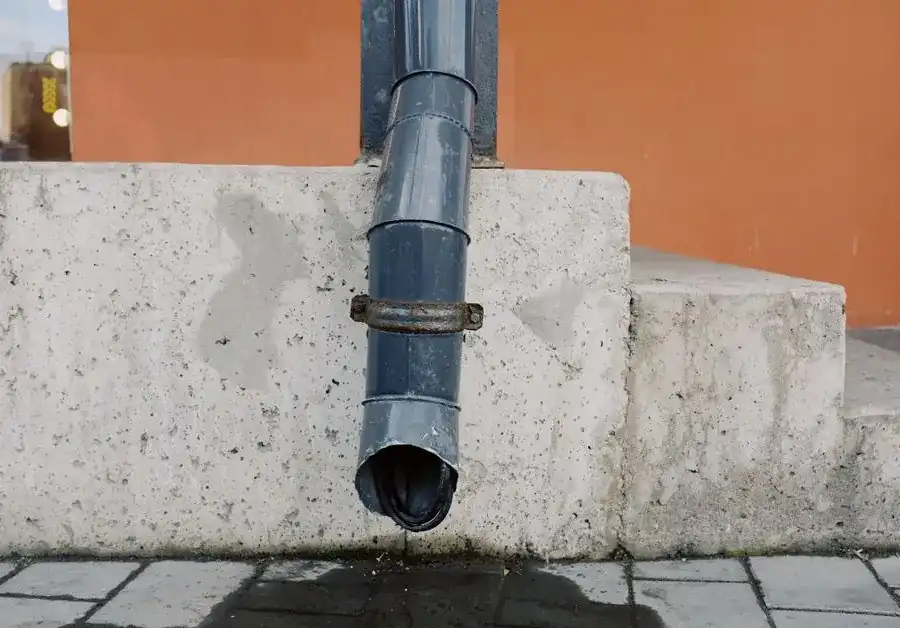

Most Barrie homes with simple rooflines can use 5-inch eavestroughs, but homes with steep roofs, long gutter runs, heavy valley flow, metal roofing, or repeated overflow often need 6-inch eavestroughs. Barrie’s snow, spring melt, summer rain, and freeze-thaw cycles make correct sizing more important than looks alone — which is why gutter size is one of the first things we check during any eavestrough installation quote.
Why Eavestrough Size Matters More in Barrie
Barrie is not a light-duty drainage market. Local roof systems deal with rain, snow, ice, meltwater, and sudden storm runoff across the year.
A small eavestrough that works during calm rain may still fail during a hard summer storm, a rain-on-leaves event in fall, or a spring thaw. In Barrie, the right choice is not simply “standard or oversized.” The better question is: how much water, snowmelt, and debris will this exact roof section send into the gutter at one time?
What 5-Inch and 6-Inch Eavestroughs Mean
A 5-inch or 6-inch eavestrough is named for the width of the gutter opening across the top. It does not describe the length of the run, the size of the downspout, or how much water the full system can drain.
That extra inch matters because it gives roof runoff a wider landing area. During heavy rain, water does not always drop neatly into the trough. It can rush off shingles, shoot out of roof valleys, or skip over the front edge. A wider eavestrough helps catch that fast-moving water before it reaches fascia, siding, soil, walkways, or the foundation.
A 6-inch eavestrough also has more room for slush, small debris, and temporary water buildup. That matters in Barrie because fall leaves, winter ice, and spring melt can all reduce how much open space remains inside the gutter.
The Short Answer for Barrie Homes
Choose 5-inch eavestroughs if your Barrie home has a simple roof, average slope, short-to-medium gutter runs, enough downspouts, and no overflow when the gutters are clean.
Choose 6-inch eavestroughs if your home has a steep roof, large roof planes, long runs, metal roofing, several valleys, or overflow during heavy rain. Also choose 6-inch if your current system spills over clean gutters during storms or thaws.
For many Barrie homes, the smartest answer is a mixed system. A simple garage or side roof may only need 5-inch eavestroughs. A rear roof section with two valleys, a second-storey drop, or a long run toward one downspout may need 6-inch eavestroughs and larger downspouts.
5-Inch Eavestroughs: Best for Standard Barrie Roofs
A 5-inch eavestrough is the common choice for many homes. It fits well on standard fascia, looks clean, and usually costs less than a 6-inch system.
This size often works for Barrie homes with:
- Basic gable roofs
- Moderate roof pitch
- Short or balanced gutter runs
- Downspouts near corners
- No major roof valleys dumping into one spot
- No major overflow when the system is clean
The main benefit is balance. A 5-inch system can handle normal roof drainage without adding extra cost or bulk. On smaller bungalows, townhomes, garages, and simple detached homes, it may be all the home needs.
The weak point is capacity. If too much roof drains into one 5-inch run, the gutter can fill faster than the downspout can empty it. Once that happens, water spills over the edge. In Barrie, that can lead to washed-out garden beds in summer, ice patches near walkways in winter, and damp soil near the foundation during spring melt.
6-Inch Eavestroughs: Best for Heavy Runoff and Snowbelt Conditions
A 6-inch eavestrough gives your roof drainage system more room to work. It catches more water, handles faster roof runoff, and pairs well with larger downspouts.
This size often makes sense for Barrie homes with:
- Steep roofs
- Large roof planes
- Long eavestrough runs
- Metal roofs
- Complex rooflines
- Multiple valleys
- Tall two-storey drops
- Mature trees near the roof
- Gutter guards
- Repeated overflow during hard rain
The real value of 6-inch eavestroughs is safety margin. Barrie homes face heavy snow, spring melt, wind-driven rain, leaf debris, and freeze-thaw cycles. A system that seems fine in light rain may be pushed past its limit when several of those issues happen close together.
A 6-inch gutter will not fix every water problem. Poor slope, clogged outlets, too few downspouts, or bad grading can still cause trouble. But when the issue is heavy roof runoff, the larger size gives the system more time and space to move water away.
Roof Catchment Area Is the Real Sizing Factor
Roof catchment area means the part of the roof that drains into one eavestrough section. This is more useful than total house size.
A 1,700-square-foot Barrie home can need 6-inch eavestroughs if one rear gutter collects water from a main roof, upper roof, and valley. A larger home may be fine with 5-inch if the roof is simple and water is split into several short runs.
This is why gutter sizing should be done by roof section. Walk around the house and look at where the water goes. The problem areas are often easy to spot:
- Inside corners
- Lower roof sections under an upper roof
- Valleys over porches or decks
- Long back runs with one downspout
- Roof sections over basement walls
- Areas where soil has washed away
If one section always fails first, the whole house may not need larger gutters. That section may need a 6-inch eavestrough, a larger outlet, another downspout, or better discharge at ground level.
Roof Pitch Changes How Fast Water Hits the Gutter
Roof pitch is the steepness of the roof. A low-slope roof sheds water more slowly. A steep roof sends water down faster, especially during heavy rain.
This matters because gutter overflow is not only about how much water the trough can hold. It is also about how fast the water enters. A steep roof can push water past a narrow gutter opening before the system has time to carry it away.
In Barrie, this becomes more important on homes with smooth roofing, newer metal roofing, or large uninterrupted roof planes. A 5-inch gutter may look large enough on paper, but a steep roof can still overwhelm it during fast storms or thaw events.
For steep roofs, 6-inch eavestroughs are often the better fit because the wider opening gives moving water more room to land.
Roof Valleys Are the Most Common Overflow Point
A roof valley is where two roof slopes meet and direct water into one channel. Valleys act like funnels. They collect water from two roof planes and send it toward one small area.
Many Barrie homeowners notice overflow near inside corners and assume the entire gutter system is too small. Sometimes it is. But often the valley is the true cause.
During a storm, a valley can send a rush of water into one short section of eavestrough. During winter, that same area may collect snow, ice, leaves, and grit. When spring melt starts, the gutter has to handle water and debris at the same time.
A 6-inch eavestrough near valleys can help. So can a larger outlet, a nearby downspout, a splash guard, or a better slope toward the downspout. The fix should match the cause.
Downspouts Can Make or Break the System
A larger eavestrough will not work well if the downspouts are too small, too few, or placed in the wrong spots.
Think of the eavestrough as a trough and the downspout as the drain. If the drain is too small, water backs up no matter how wide the trough is. This is why many 6-inch systems are paired with larger downspouts.
For Barrie homes, downspout layout matters because roof water must move away from the house before it freezes, pools, or reaches the foundation. A gutter that is sized correctly but pulls away from the fascia can still let water run behind the eavestrough instead of into the downspout, so hanger spacing and slope matter just as much as width.
Good downspout planning should answer five questions:
- Does each long run have enough exits?
- Are downspouts close to valleys and high-flow areas?
- Are outlets large enough for the gutter size?
- Do elbows clog or freeze often?
- Does the water discharge far enough from the foundation?
A 5-inch eavestrough with strong downspout placement can outperform a 6-inch eavestrough with poor drainage layout.
Barrie-Specific Signs You May Need 6-Inch Eavestroughs
You should consider 6-inch eavestroughs if clean gutters still overflow during heavy rain. Clean matters. If the gutters are packed with leaves, the first fix is cleaning and outlet inspection.
Other warning signs include:
- Water spilling over inside corners
- Soil trenches under the roof edge
- Mulch washing away after storms
- Stains on fascia or siding
- Water collecting near basement walls
- Ice forming below downspouts
- Overflow during spring thaw
- Repeated clogging at small outlets
- Water skipping over the gutter on steep roof sections
Barrie homes with mature trees need extra attention. Leaves and seed pods can block outlets before winter. Then snow and ice lock that debris in place. By spring, meltwater has fewer paths out, so overflow can happen even before a major rain.
When 5-Inch Eavestroughs Are Still the Better Choice
Bigger is not always better. A 6-inch eavestrough can look heavy on a small bungalow, porch, shed, garage, or narrow fascia board. It also costs more and may need larger hangers or downspouts.
A 5-inch system is still a smart choice when the roof is simple, the water path is short, and the downspouts are placed well. It may also be the better choice for visible front elevations where the roof section does not carry much water.
Do not upgrade only because 6-inch sounds stronger. Upgrade because the roof section needs more capacity. If your issue is poor slope, loose hangers, clogged outlets, short downspout extensions, or bad grading, a larger gutter may hide the problem without solving it.
5-Inch vs 6-Inch Eavestroughs for Barrie Homes
| Factor | 5-Inch Eavestroughs | 6-Inch Eavestroughs |
|---|---|---|
| Best use | Standard Barrie homes with simple rooflines | Steep, large, or complex Barrie roofs |
| Rain handling | Good for normal roof runoff | Better for heavy rain and fast runoff |
| Snow and slush room | Less spare room | More spare room |
| Roof valleys | May overflow if valley flow is high | Better near heavy-flow valleys |
| Appearance | Slimmer and less noticeable | Larger and more visible |
| Cost | Usually lower | Usually higher |
| Downspouts | Often paired with smaller downspouts | Often paired with larger downspouts |
| Clog risk | Smaller outlets can block faster | Larger outlets may pass debris better |
| Best Barrie fit | Simple roofs, garages, smaller homes | Two-storey homes, metal roofs, long runs, mature trees |
Cost Difference in Barrie: What You Are Really Paying For
Six-inch eavestroughs usually cost more because they use more material and often need larger accessories. Larger downspouts, stronger hangers, extra outlets, and more careful installation can add to the total. For real numbers by home size, see our eavestrough installation cost guide for Barrie.
But the cheapest system is not always the lowest-cost choice over time. If 5-inch eavestroughs overflow, the repair costs may show up somewhere else: rotten fascia, stained siding, basement dampness, foundation soil washout, damaged landscaping, or winter ice hazards.
For Barrie homeowners, value comes from matching the system to the risk. A full 6-inch upgrade may be worth it for a large or steep home. A partial upgrade may be better for a house with only one or two problem areas.
The best money is often spent on the full drainage path, not gutter width alone. That includes eavestrough size, outlet size, downspout count, extensions, slope, hanger spacing, and where water lands. Forming the run as one seamless system also removes several joints that would otherwise become future leak points, regardless of which width you choose.
Gutter Guards Do Not Replace Proper Sizing
Gutter guards can reduce leaves and debris, but they do not create more drainage capacity. Some guard styles can slow water entry during hard rain, especially on steep roofs.
This matters in Barrie because tree debris and winter conditions often overlap. A guard may keep large leaves out, but fine debris, ice, and roof grit can still affect flow. If the gutter was already near its limit, adding guards may make sizing more important.
If you plan to install gutter guards, 6-inch eavestroughs may be the safer choice on steep, long, or valley-heavy roof sections. The wider gutter gives water more room to enter and move, even if the guard slows the first contact.
Ice, Snow, and Freeze-Thaw: What Size Can and Cannot Fix
Eavestrough size can help with drainage, but it cannot solve every winter problem.
Ice dams form when heat escapes into the attic, melts roof snow, and the water refreezes near the colder eaves. A larger gutter may hold more meltwater, but it does not fix the heat loss that starts the problem.
For Barrie homes, a winter-ready system needs more than wider eavestroughs. It needs proper attic insulation, roof ventilation, clean gutters before freeze-up, clear downspout outlets, and safe discharge away from walking areas.
A 6-inch eavestrough can help when winter overflow comes from capacity limits, slush buildup, or heavy thaw flow. It will not fix missing insulation, blocked soffits, poor roof ventilation, or heat loss from the living space.
A Simple Barrie Homeowner Decision Rule
Use this rule before choosing:
Choose 5-inch eavestroughs if the roof section is simple, short, and has a clear downspout path.
Choose 6-inch eavestroughs if the roof section is steep, long, valley-fed, tree-covered, metal, or already overflowing when clean.
Upgrade the downspouts if the gutter fills but drains too slowly.
Fix the slope or hangers if water sits in the gutter after rain.
Improve the ground discharge if water exits the downspout but flows back toward the foundation.
This rule works because eavestroughs are only one part of the water path. The roof collects water. The gutter catches it. The downspout moves it down. The extension and ground slope move it away. A weak point anywhere in that chain can cause damage.
Common Mistakes Barrie Homeowners Should Avoid
One mistake is replacing old eavestroughs with the same size without checking roof flow. Older systems may have been installed for cost, not performance.
Another mistake is blaming size when the gutters are clogged. A blocked 6-inch gutter still overflows. Clean the system first, then judge capacity during rain.
A third mistake is ignoring the downspout exit. If water drains beside the foundation, the gutter has done only half the job.
A fourth mistake is using one size everywhere. Roof sections do different jobs. A low-risk front run may be fine with 5-inch, while the back of the house may need 6-inch because it handles more water.
Final Verdict: Which Size Does Your Barrie Home Need?
Most simple Barrie homes can use 5-inch eavestroughs if the roof slope is moderate, the runs are not too long, and the downspouts are placed well.
Many Barrie homes benefit from 6-inch eavestroughs because local conditions add stress: heavy snow, frequent precipitation, spring melt, leaf debris, and summer storms. The upgrade is most useful on steep roofs, long runs, metal roofs, large roof planes, and sections fed by valleys.
The best choice is not based on house size alone. It is based on water load. Watch where your roof sends water, check where overflow happens, and size each section based on how much runoff it must handle. For Barrie’s climate, the safest system is the one that moves water away before it can freeze, spill, soak, or damage the home. If you’d rather have us walk the roofline with you, request a free sizing estimate before your next install.
Think You Might Need Eavestrough Work?
Get a free, no-obligation assessment for your Barrie home.