
Eavestroughs overflow during heavy rain when water cannot move fast enough from your roof to the downspouts and away from your home. The most common causes are clogs, poor slope, undersized gutters, blocked downspouts, roof runoff surges, ice damage, or drainage problems near the foundation.
Why Overflowing Eavestroughs Are a Bigger Problem Than They Look
Overflowing eavestroughs may look like a simple water spill, but they often point to a broken drainage path. Your roof collects rain over a large surface. The eavestrough is supposed to catch that water, move it to the downspouts, and send it safely away from the house.
When one part of that path slows down, water backs up. During light rain, the system may still cope. During heavy rain in Barrie, the weakness shows up fast. Water spills over the front edge, pours behind the gutter, or leaks from corners.
That overflow can damage more than the gutter. It can soak fascia boards, stain siding, flood garden beds, wash out soil, and push water toward the basement. In Simcoe County, where homes deal with heavy rain, snowmelt, freezing, and thawing, poor eavestrough drainage can also make winter ice problems worse.
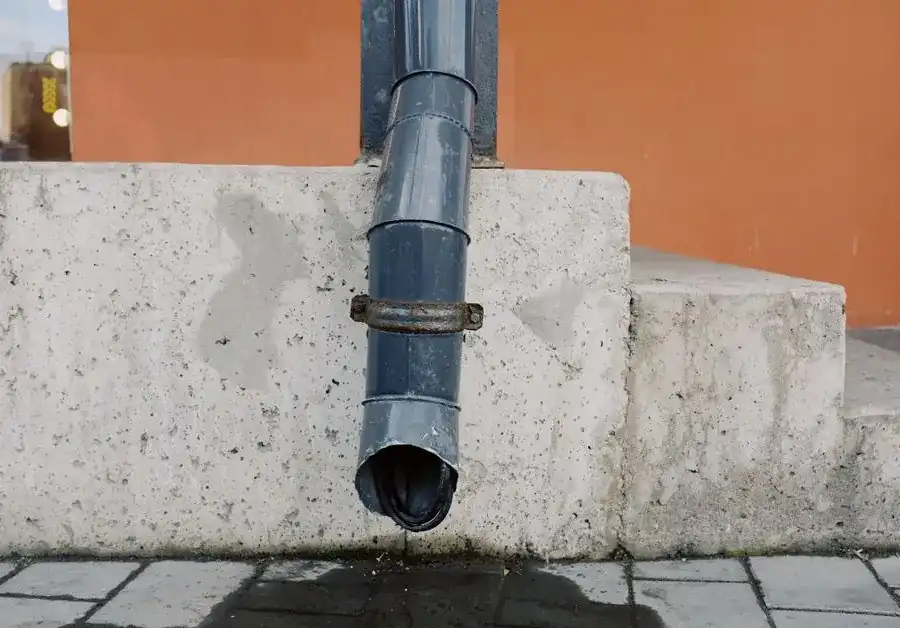
An eavestrough is the horizontal channel along your roof edge that collects rainwater. A downspout is the vertical pipe that carries that water down to ground level. Both must work together. A clean gutter with a blocked downspout can still overflow. A clear downspout with a poorly sloped gutter can also fail.
The Most Common Cause: Leaves, Seeds, and Debris Blocking Water Flow
The most common reason eavestroughs overflow is debris. Leaves, pine needles, roof grit, small twigs, seed pods, and dirt collect inside the trough. Over time, this material forms a thick layer that slows water. Regular eavestrough cleaning is the simplest fix here — see our cleaning cost guide for Barrie for what that typically runs.
The problem is not always a full blockage. Even a thin layer of debris can reduce the gutter’s carrying space. Heavy rain then has less room to move. Water rises, reaches the front lip, and spills over.
Barrie homes with mature trees nearby often see this problem in spring and fall. Spring brings buds, seeds, and small debris. Fall brings leaves. Wind can also blow debris from neighbouring trees onto the roof, even if your own yard has few trees.
A clog usually forms near the downspout outlet first. That opening is the narrowest part of the system. Once it plugs, the rest of the trough fills like a bathtub with a closed drain.
Signs of debris blockage include water spilling from one section, plants growing in the gutter, black streaks on the outside edge, or water pouring over during storms but not during light rain.
Your Downspouts May Be Blocked Even If the Gutters Look Clean
A downspout can hide the real issue. From the ground, your eavestrough may look clean, but the vertical pipe may be packed with leaves, mud, shingle grit, or a bird nest. If clogs, crushed sections, or poor placement keep coming back, it may be time to look at proper downspout installation rather than repeat clearing the same pipe.
This happens because water pulls loose debris toward the outlet. The debris then drops into the downspout and jams inside an elbow. Elbows are common clog points because they change the direction of water flow. When debris reaches that bend, it can catch and build up.
A blocked downspout creates fast overflow near the outlet. Water may pour over the gutter end, leak from seams, or back up along the trough. If the blockage is low in the pipe, water may leak from downspout joints.
You can often spot a blocked downspout during rain. If water is spilling from the eavestrough but little or no water comes out at the bottom of the downspout, the pipe is likely blocked.
Downspouts also need proper discharge at ground level. If the bottom empties too close to the house, water may pool beside the foundation. That does not always cause gutter overflow, but it creates a second drainage problem that can lead to damp soil, basement seepage, or foundation stress.
The Eavestrough Slope May Be Wrong
Eavestroughs need a slight slope toward the downspout. If the slope is too flat, water sits in the trough. If the slope leans the wrong way, water moves away from the outlet and pools at the far end. This is one of the most common issues we correct during eavestrough repair calls.
A gutter slope is the gentle angle that helps water drain by gravity. It should be enough to move water, but not so steep that the gutter looks crooked from the ground.
Slope problems often appear after years of use. Heavy snow, ice, loose hangers, warped fascia, or poor installation can change the angle. A long gutter run is more likely to show this issue because water has farther to travel.
The main sign is standing water after rain. If water remains in the trough long after the storm ends, the eavestrough is not draining well. That standing water adds weight. More weight pulls on the hangers. The sag gets worse, and the overflow becomes more frequent.
In Barrie, freeze-thaw cycles make this worse. Water sitting in the gutter can freeze, expand, and push against joints. Ice also adds weight. Over time, the trough can sag enough to spill during the next heavy rain.
Your Eavestroughs May Be Too Small for the Roof
Some eavestroughs overflow because they are undersized. This means the gutter or downspout cannot handle the amount of water coming off the roof during a strong storm. If that’s the case, cleaning and repair will not solve it — the fix is a proper eavestrough installation sized to the roof, and our guide to 5-inch vs 6-inch eavestroughs explains exactly how to tell which size your home needs.
A large roof area sends a large volume of water to the eavestrough. Steep roofs shed water faster than low-slope roofs. Metal roofs and newer smooth shingles can also move water quickly. When fast runoff reaches a small gutter, the water can overshoot or fill the trough before the downspout drains it.
This problem often shows during sudden downpours. The system may work during normal rain but fail during heavy rain. That is a capacity issue, not always a clog.
Homes with long roof valleys are more prone to this. A roof valley is the inside angle where two roof planes meet. Valleys collect water from two roof sections and send it to one spot. During heavy rain, that spot can receive a strong surge. If the eavestrough below it is too small or lacks a nearby downspout, overflow is likely.
The fix may involve larger eavestroughs, bigger downspouts, extra downspouts, or a diverter near high-flow roof valleys.
Roof Water May Be Overshooting the Gutter
Sometimes the water does not overflow because the gutter is full. It misses the gutter completely.
This often happens on steep roofs, metal roofs, or roofs with a large upper section draining onto a lower section. During heavy rain, water gains speed as it runs down the shingles. If the gutter sits too low, too far out, or too far back, runoff can shoot past the opening — and if it lands behind the trough instead of the ground, that’s really water running behind the eavestrough, which needs a different fix than a simple overflow.
Overshooting is common near roof valleys because the water is concentrated. Instead of a soft sheet of rain entering the trough, a fast stream hits one small area. The gutter cannot catch it cleanly.
You may notice water flying over the front edge while the rest of the gutter looks only partly full. This points to roof flow speed or gutter placement, not a simple blockage.
A splash guard can help in some valley areas. A splash guard is a small metal piece installed on the gutter edge to stop fast water from jumping over. But it only works when the gutter is otherwise clean, sloped, and sized properly.
Sagging or Loose Eavestroughs Can Spill Water Behind the Fascia
Eavestroughs must sit firmly against the fascia board. The fascia is the long board behind the gutter along the roof edge. If hangers loosen, the trough can pull forward or sag — see our full guide on why eavestroughs sag for the underlying causes and repair options.
Once that happens, water may run behind the eavestrough instead of into it. This is serious because hidden water can soak the fascia and roof edge. Over time, wood can rot, paint can peel, and the gutter can pull away even more.
Sagging also changes the slope. One low point can collect water and debris. That creates more weight, which makes the sag worse. It becomes a cycle: water sits, debris builds, hangers loosen, and overflow increases.
Heavy snow and ice are common causes in Ontario. If the eavestrough was not installed with enough strong hangers, winter weight can bend it out of line. Ladder damage and falling branches can also pull sections loose.
Look for gaps between the gutter and fascia, uneven lines, dripping behind the trough, or nails and screws backing out.
Ice, Snow, and Freeze-Thaw Damage Can Cause Rain Overflow Later
Many homeowners notice overflow in spring or during winter rain. The cause may have started weeks earlier.
In Barrie, snow can sit on the roof and melt during the day. At night, that water can freeze in the eavestrough. Repeated freezing can create ice dams, blocked downspouts, and heavy gutter loads.
An ice dam forms when melted snow refreezes near the roof edge and blocks water from draining. While ice dams are often linked to roof heat loss, clogged or poorly draining eavestroughs can make the problem worse.
Ice can bend hangers, open seams, crack joints, and push the trough out of position. After the ice melts, the gutter may no longer drain the way it should. Then the next heavy rain causes overflow.
This is why a spring eavestrough check matters. A system can look fine from the ground but still have loose brackets, separated corners, or a changed slope after winter.
Gutter Guards Can Still Overflow If They Are Dirty or Poorly Matched
Gutter guards reduce debris, but they do not make eavestroughs maintenance-free. Some guards handle heavy rain better than others. Fine mesh guards can collect pollen, roof grit, and wet leaves on top. Solid cover guards can send fast water past the edge if the flow is too strong.
A gutter guard is a cover that helps keep debris out while allowing water into the eavestrough. Its success depends on roof type, tree cover, pitch, rainfall intensity, and installation quality.
If your gutters overflow after guards were installed, the issue may be surface blockage, wrong guard style, poor angle, or too much water entering one roof valley. The gutter underneath may also have old debris that was never removed before the guards went on.
During heavy rain, watch how water behaves. If it sheets over the guard and falls to the ground, the guard surface is the problem. If water enters the guard but spills from the gutter edge, the problem may be inside the system.
Seams, Corners, and End Caps May Be Leaking
Not every “overflow” is true overflow. Sometimes water leaks from a joint and looks like the gutter is spilling.
Sectional eavestroughs have seams where pieces connect. Corners, end caps, and downspout outlets also have sealed joints. Over time, sealant can dry, crack, or pull apart. Ice movement can speed up this damage.
A leaking seam usually drips from one exact spot, even during lighter rain. Overflow spreads over a wider area and often happens only when rain is heavy.
This difference matters because the fix is different. A leak may need cleaning, drying, resealing, or replacing a joint. Overflow needs a flow correction, such as cleaning, slope adjustment, downspout repair, or capacity upgrades.
If water is staining one corner of your siding or dripping from a mitered corner, inspect the joint closely. Corners carry a lot of water and fail sooner than straight runs.
Water May Be Backing Up at Ground Level
The eavestrough system does not end at the downspout. Water must move away from the foundation after it reaches the ground.
If the downspout empties into a clogged underground drain, water can back up. During heavy rain, the pipe fills and water may rise at the base of the downspout. In some cases, pressure can slow the entire downspout and contribute to overflow above.
This is common where downspouts connect to buried drain lines. Those lines can clog with roots, soil, leaves, or ice. They can also collapse or slope the wrong way.
A downspout extension is a simple pipe or channel that carries water away from the house. It should discharge where the ground slopes away, not into a low spot beside the wall.
For Barrie homes, this matters because spring melt and heavy rain can saturate soil quickly. Once soil near the foundation is wet, more water has nowhere to go. That raises the risk of basement dampness.
How to Tell What Type of Overflow You Have
The location of the water tells you a lot.
If water spills near the downspout, suspect a clog in the outlet or vertical pipe. If it spills from the middle of a long run, look for sagging or poor slope. If it jumps over near a roof valley, the gutter may be undersized, poorly placed, or missing a splash guard.
If water runs behind the gutter, check the hangers, fascia, and roof edge. If it leaks from one corner, inspect the seam. If overflow happens only during extreme downpours, your system may need more capacity.
Timing also helps. Overflow during every rain usually means a blockage, leak, or slope issue. Overflow only during heavy rain points to capacity, roof surge, or partial blockage. Overflow after winter often points to ice damage or shifted alignment.
Do not judge by ground view alone. Many eavestrough problems hide inside the trough or downspout. A small outlet clog can make a full-length gutter fail.
What You Can Safely Check From the Ground
You can learn a lot without climbing a ladder.
Walk around your home during or right after rain. Look for where water spills, where it lands, and whether the downspouts are flowing. Check for soil washout, mulch displacement, siding stains, or puddles near the foundation.
From the ground, look along the gutter line. A healthy run should look straight with a slight drain direction. A dip, bow, or pulled-away section points to sagging.
Check the bottom of each downspout. Water should exit freely and move away from the house. If it trickles during heavy rain, the downspout may be blocked. If it pours beside the foundation, the discharge point needs correction.
Avoid climbing during wet or windy weather. Eavestrough work can be risky, especially on two-storey homes or icy ground. If the issue requires ladder work, roof access, or downspout removal, it is safer to call a professional.
How Overflowing Eavestroughs Are Usually Fixed
The right fix depends on the cause.
For debris, the system needs a full cleanout, including the troughs, outlets, elbows, and downspouts. Cleaning only the visible gutter may leave the main blockage in place.
For slope problems, the hangers may need adjustment. In some cases, sections must be rehung so water drains toward the outlets. If the fascia is rotten, that wood must be repaired first, or the gutter will not hold properly.
For undersized systems, cleaning will not solve the root issue. The home may need larger eavestroughs, larger downspouts, more outlets, or added downspouts on long runs. Roof valleys may need splash guards or better water control.
For leaking seams, old sealant must be removed before new sealant is applied. Sealing over dirt or wet material rarely lasts.
For ground drainage problems, downspout extensions, grading changes, or underground drain repairs may be needed. The goal is simple: move roof water away from the home before it can soak the foundation area.
Why Barrie Homes Need Seasonal Eavestrough Attention
Barrie weather puts eavestroughs through several stress cycles each year. Spring brings thawing snow, rain, roof grit, and debris. Summer storms can drop heavy rain in a short time. Fall leaves can clog outlets fast. Winter adds ice weight and freeze-thaw movement.
That cycle means a gutter system can change from “working fine” to “overflowing badly” within one season.
Homes near trees, older neighbourhoods, and properties with complex rooflines need closer attention. A simple roof with short gutter runs may only need routine cleaning. A larger home with valleys, dormers, upper roofs, and multiple downspouts needs better water planning.
The real goal is not just clean eavestroughs. It is controlled water movement from roof to ground. Each part must support the next part.
What Happens If You Ignore Overflowing Eavestroughs?
Ignoring overflow can lead to hidden damage.
Water that spills over the front can dig trenches in soil and damage landscaping. Water that runs behind the gutter can rot fascia and soffit areas. Water that lands near the house can increase pressure around the foundation. Over time, that can contribute to basement leaks or dampness.
Siding can also suffer. Dirty roof water may leave stains, algae streaks, or splash marks. Brick and mortar can absorb moisture. Walkways and steps can become slippery during rain and icy during cold snaps.
The cost often grows because the visible symptom appears late. By the time you notice water pouring over, the system may already have sagging, trapped debris, or water-damaged wood.
Fast action is usually cheaper than waiting. A cleanout or adjustment is simpler than replacing fascia, repairing a basement leak, or regrading soil around the home.
When to Call an Eavestrough Professional
Call a professional if overflow continues after cleaning, if water runs behind the gutter, if downspouts do not drain, or if the gutter line looks uneven. You should also get help if the home is two storeys, the roof is steep, the ground is uneven, or the problem appears after ice damage.
A professional can test flow, inspect slope, clear downspouts, repair seams, add hangers, and check whether your system has enough capacity for the roof. They can also spot problems that look like gutter issues but are caused by roofing, fascia, or grading.
For Barrie homeowners, the best time to inspect is before heavy spring rain, after fall leaf drop, and after major winter ice buildup. That timing helps prevent overflow before it turns into water damage.
How to Prevent Eavestrough Overflow During the Next Heavy Rain
Prevention starts with keeping the water path open. Clean the eavestroughs before peak rain seasons. Make sure outlets and downspouts are clear. Keep downspout extensions in place. Watch problem areas during storms so you know where water is failing.
Trim branches that hang over the roof if they drop heavy debris. Check gutter guards for surface buildup. Look for sagging after winter. Confirm that water exits well away from the foundation.
For homes with repeated overflow in the same spot, do not keep cleaning the gutter and hoping it improves. Repeated overflow usually means a design issue, slope issue, or roof flow problem. That area may need a larger outlet, extra downspout, splash guard, or gutter realignment.
A good eavestrough system should handle normal heavy rain without water spilling over the edges. If it cannot, the system is telling you something is blocked, bent, undersized, or poorly directed.
Final Answer: Why Your Eavestroughs Overflow in Heavy Rain
Your eavestroughs are overflowing because the rainwater path is restricted, misdirected, or too small for the amount of water coming off your roof. The cause may be debris, a blocked downspout, poor slope, sagging, ice damage, leaking joints, roof valley surges, or weak ground drainage.
For Barrie homeowners, the issue should not be ignored. Heavy rain, snowmelt, and freeze-thaw cycles can turn a small overflow into fascia damage, siding stains, soil washout, or basement moisture. The best fix is to find where the water flow breaks, correct that point, and make sure the system can carry roof water safely away from the home. Request a free inspection and we’ll tell you exactly where your system is failing.
Think You Might Need Eavestrough Work?
Get a free, no-obligation assessment for your Barrie home.