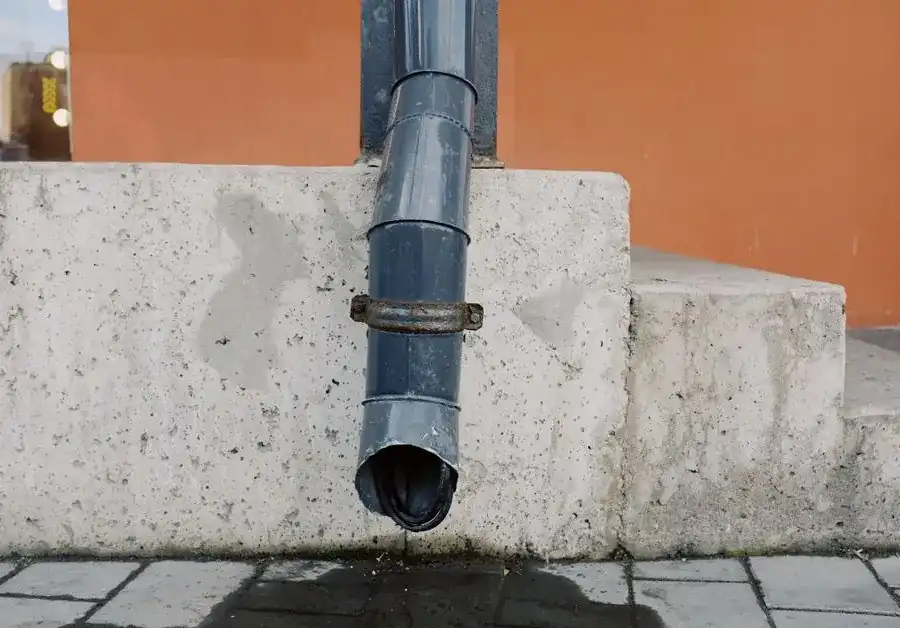
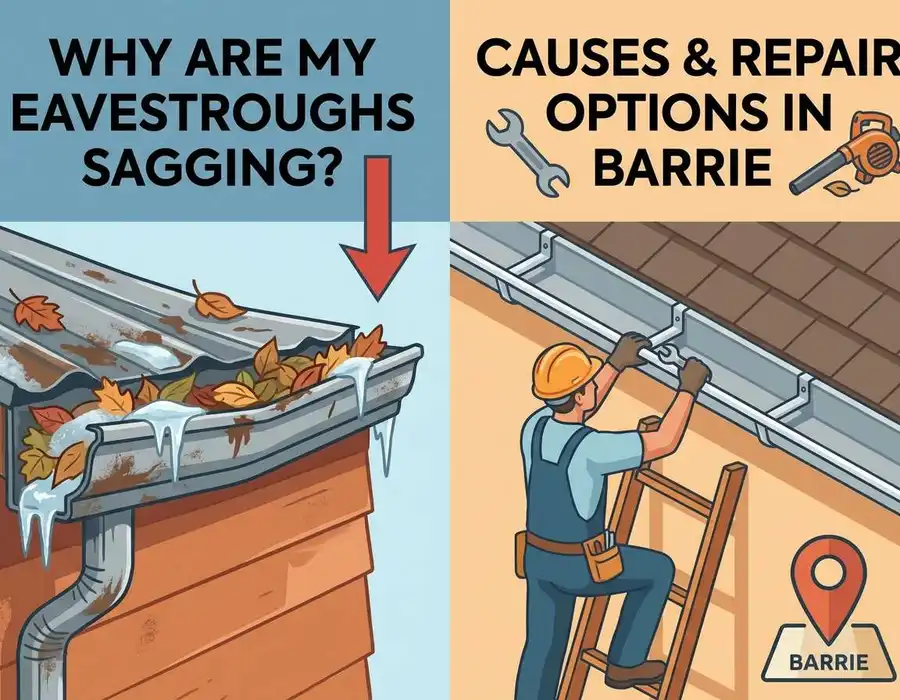
Sagging eavestroughs usually mean the gutter system is overloaded, loose, poorly sloped, or pulling away from weak fascia boards. In Barrie, snow, ice, freeze-thaw cycles, and clogged fall debris make the problem worse. Fixing the cause early with proper eavestrough repair helps protect your roof edge, siding, foundation, and basement from water damage.
Why Sagging Eavestroughs Are a Bigger Problem Than They Look
A sagging eavestrough is more than a crooked line along your roof. It changes how water moves off your home. Instead of flowing toward the downspout, rainwater collects in low spots, spills over the edge, or backs up toward the roofline — one of the most common causes behind eavestroughs overflowing during heavy rain.
That trapped water adds weight. The extra weight pulls harder on the fasteners. Over time, the eavestrough drops lower, the fascia weakens, and the slope gets worse. This creates a cycle: the more it sags, the more water it holds; the more water it holds, the more it sags.
For homeowners in Barrie and Simcoe County, this issue often shows up after winter or during heavy spring rain. Snow, ice, pine needles, roof grit, and leaves can all sit inside the trough. Once the system stops draining, the gutter is no longer guiding water away from the house. It becomes a long, heavy container hanging from the roof edge.
A working eavestrough is a drainage channel attached to the lower edge of the roof. Its job is to catch roof runoff and move it through downspouts away from the foundation. When it sags, that simple job breaks down.
Common Signs Your Eavestroughs Are Sagging
The first sign is often visual. You may notice a section that dips in the middle, pulls away from the fascia, or hangs lower than the rest of the run. From the ground, the gutter may look wavy instead of straight.
Water gives even better clues. During rain, look for water pouring over one section, dripping behind the gutter, or spilling near the foundation. These signs often mean the eavestrough has lost its slope or is blocked.
You may also see stains on siding, soil washout below the roofline, mulch pushed away from garden beds, or puddles near the basement wall. Inside the home, musty basement smells or damp spots can point to poor exterior drainage.
Do not ignore gaps between the eavestrough and fascia. That space allows water to run behind the gutter. Once water reaches the fascia board again and again, wood can soften, paint can peel, and fasteners can lose their grip.
Main Causes of Sagging Eavestroughs
1. Clogged Eavestroughs Add Too Much Weight
Clogs are one of the most common reasons eavestroughs sag. Leaves, maple keys, pine needles, roof granules, small twigs, and dirt collect inside the trough. When rain hits, this debris acts like a sponge and holds water.
Water is heavy. A long section of clogged eavestrough can carry far more weight than the hangers were meant to support. If that weight stays in place for days, the metal can bend, the hangers can loosen, and the whole run can dip.
In Barrie, clogs often build up in late fall and become a winter problem. If leaves block the downspout before freezing weather, trapped water may turn to ice. Ice expands and adds more weight, which can pull the system away from the home.
The repair depends on how long the clog has been there. A fresh clog may only need cleaning and flushing. A long-term clog may require hanger replacement, slope correction, or fascia repair.
2. Loose or Failing Hangers
Eavestrough hangers are the brackets or supports that hold the gutter to the fascia. They carry the weight of the system and keep the gutter at the right angle. If hangers loosen, rust, bend, or pull out, the gutter starts to drop.
Older homes may still have spike-and-ferrule systems. These use long nails driven through the front of the gutter into the fascia. Over time, the nails can back out. Wind, ice, water weight, and wood movement all make the holes larger. Once the hole no longer grips the spike, the gutter sags.
Hidden hangers are stronger and cleaner-looking. They sit inside the eavestrough and screw into the fascia. When placed at the right spacing, they hold the trough more firmly than old spikes.
If only a few hangers are loose, repair may be simple. If many have failed, the system may need a full re-hang with stronger supports.
3. Rotten or Soft Fascia Boards
The fascia board is the long board behind the eavestrough. It gives the gutter something solid to attach to. If the fascia rots, cracks, or gets soft, even good hangers will not hold well.
Fascia damage often starts when water leaks behind the eavestrough. This can happen because of poor slope, missing drip edge, clogged gutters, or gaps at the back of the trough — the same pattern we cover in our guide to water running behind the eavestrough. Once water soaks the wood, the fasteners start to loosen.
You may see peeling paint, dark stains, soft spots, or sections where the gutter is pulling away. In some cases, the eavestrough looks like the problem, but the real issue is the board behind it.
Repairing only the gutter without fixing rotten fascia is a short-term patch. The fasteners may pull out again after the next heavy rain or snowfall. A proper repair removes the weak wood, replaces it with sound material, and then reattaches the eavestrough securely.
4. Poor Slope or Incorrect Pitch
Eavestroughs need a slight slope so water can move toward the downspout. Pitch means the angle of the gutter from one end to the other. It should be subtle, but it must be enough to keep water moving.
If the slope is too flat, water sits in the trough. If the slope points the wrong way, water flows away from the downspout. If one section dips, water pools there and pulls the gutter down further.
Poor pitch can come from bad installation, settling, loose hangers, or damage from ice. Sometimes a homeowner notices the issue only after a strong rain because water spills over the low point instead of draining.
Re-pitching means adjusting the gutter height so water flows correctly. This is a careful repair because the line must look straight from the ground while still having enough drainage slope.
5. Snow and Ice Load in Barrie Winters
Barrie winters can be hard on eavestroughs. Snow slides from the roof, ice forms along the edge, and freeze-thaw cycles add stress to every joint and hanger — a pattern covered in more depth in our guide to snow and ice damage to eavestroughs.
When snow melts during the day and refreezes at night, ice can build inside or near the eavestrough. This creates a heavy ridge. If the downspout is frozen, meltwater has nowhere to go. The trough fills, freezes, and pulls down.
An ice dam is a ridge of ice near the roof edge that blocks melting snow from draining properly. Water can then back up under shingles or spill over the eavestrough. Sagging gutters do not cause every ice dam, but they can make drainage worse.
Repair may need more than gutter work. Attic insulation, ventilation, roof edge details, and downspout flow can all affect ice buildup. If the same section sags every winter, the system may need stronger hangers, better drainage, and a review of roof runoff patterns.
6. Hangers Spaced Too Far Apart
Even a new eavestrough can sag if the hangers are too far apart. Long gaps between supports allow the metal to flex under water, ice, and debris.
This is a common issue on long roof runs, garages, additions, and older installations. The trough may look fine when empty, but during heavy rain it bends between support points. Over time, those bends become permanent.
In snow-heavy areas, closer hanger spacing is often needed for better strength. More support points spread the load instead of forcing a few fasteners to carry everything.
The repair is usually adding or replacing hangers. If the eavestrough has already warped, the contractor may need to reshape, re-pitch, or replace that section.
7. Damaged or Undersized Downspouts
A sagging eavestrough can start at the downspout. If the downspout is clogged, crushed, undersized, or poorly placed, water backs up into the trough. That standing water creates weight and strain.
Downspouts must move water away as fast as the roof delivers it. Large roof sections, steep slopes, and valleys can send a lot of water into one gutter run. If there are not enough outlets, the system becomes overloaded during storms.
You may see water spilling near the downspout, hear gurgling, or notice one corner sagging more than the rest. The issue may not be the gutter itself. It may be the exit path.
Repair options include clearing the downspout, adding a larger outlet, installing another downspout, or extending the discharge farther from the foundation.
8. Aging Eavestrough Materials
Eavestroughs do not last forever. Aluminum can bend. Steel can rust. Vinyl can crack in cold weather. Seams can separate. Sealant can fail. Fastener holes can stretch.
As materials age, they lose strength. A gutter that once held up well may start to sag after years of snow, wind, heat, and ice. The problem is often worse where old repairs have been made, because patched sections may not carry weight evenly.
If the eavestrough is dented, twisted, leaking at several points, or sagging in many areas, replacement may be smarter than repeated repairs. A full replacement can also improve downspout placement, slope, hanger spacing, and drainage capacity.
Repair Options for Sagging Eavestroughs
Option 1: Clean and Flush the System
If the sagging is mild and the gutter is mainly clogged, cleaning may solve the immediate problem. The trough should be cleared by hand, then flushed with water to confirm flow toward the downspout.
This repair is best when the eavestrough is still firmly attached and has not bent out of shape. Cleaning removes the weight, but it does not fix loose hangers, rotten fascia, or wrong slope.
For homes near mature trees in Barrie, cleaning once a year may not be enough. Spring and late fall cleaning can prevent weight buildup before heavy rain and freezing weather.
Option 2: Refasten Loose Sections
If the eavestrough has pulled away but the fascia is solid, loose sections can often be reattached. This may involve removing old spikes and replacing them with stronger hidden hangers.
The key is not just pushing the gutter back into place. The support must bite into firm wood. If a screw goes into a damaged hole or soft fascia, it may hold for a short time and fail again.
A good repair also checks alignment. Refastening the gutter at the wrong height can trap water or send it away from the downspout.
Option 3: Add More Hangers
Adding hangers helps when the eavestrough sags between support points. This is common on long runs or areas that carry heavy snow and ice.
The new hangers should be placed close enough to spread the load. They should also be fastened into solid fascia or rafter tails where possible. Randomly adding brackets without checking the slope may create new low spots.
This option works well when the gutter material is still in good shape. If the trough is badly bent or cracked, added hangers may not restore proper drainage.
Option 4: Re-Pitch the Eavestrough
Re-pitching fixes the slope. The gutter is loosened, adjusted, and re-secured so water flows toward the downspout.
This repair is useful when water sits in the middle of the run or flows the wrong way. It also helps after sections have dropped due to loose hangers.
The result should be tested with water. A gutter can look straight and still drain poorly. The real test is whether water moves smoothly to the outlet without pooling.
Option 5: Replace Rotten Fascia
If the fascia is rotten, it must be repaired before the eavestrough can be fixed properly. The damaged board should be removed and replaced with solid material. Any source of water getting behind the gutter should also be corrected.
This may include adding or fixing drip edge, sealing gaps, improving slope, or adjusting how the gutter sits against the roof edge.
Replacing fascia is more involved than a simple gutter repair, but it prevents repeat failure. Once the backing is strong, the eavestrough can be mounted securely.
Option 6: Repair or Add Downspouts
If water backs up because the downspout cannot keep up, the drainage path needs work. Clearing the outlet may solve a simple blockage. Larger problems may need bigger outlets, extra downspouts, or better placement.
A downspout extension is the section that carries water away from the base of the house. Without it, water may drain right beside the foundation. This can raise the risk of basement leaks, soil movement, and foundation pressure.
In many cases, adding a downspout is one of the best ways to reduce gutter strain. It shortens the distance water must travel and lowers the chance of overflow during heavy storms.
Option 7: Replace the Damaged Section
If one section is bent, twisted, split, or crushed, replacing that section may be better than reshaping it. This is common after ice damage, ladder impact, tree branch damage, or years of standing water.
Partial replacement can work when the rest of the system is sound. The new section must match the old profile and be joined properly so it does not leak.
This repair should also address why that section failed. If ice buildup caused the damage, simply replacing the piece may not stop the issue from coming back.
Option 8: Full Eavestrough Replacement
Full replacement makes sense when the system has many weak points. Signs include sagging in several areas, frequent leaks, rust, cracked seams, poor downspout layout, and repeated repairs.
A new system gives you a chance to correct the whole drainage design. That includes proper slope, stronger hangers, clean corners, enough downspouts, and better water discharge away from the foundation.
For many older Simcoe County homes, this option costs more upfront but prevents years of patchwork. It is often the better choice when both the eavestroughs and fascia are aging.
How to Decide Between Repair and Replacement
Start with the number of problem areas. One sagging spot usually points to a local issue, such as a loose hanger, clog, or damaged fascia section. Several sagging sections often mean the system is aging or was installed poorly.
Next, check the material condition. If the eavestrough is straight, solid, and only loose, repair is likely enough. If it is bent, cracked, rusted, or leaking at multiple seams, replacement may be more practical. Our full repair vs replacement guide walks through this decision in more detail, and our repair cost guide has typical pricing for each option above.
Look at the fascia. Solid fascia supports repair. Rotten fascia changes the job. You cannot build a long-term fix on weak wood.
Then consider water behavior. If water drains well after cleaning and re-pitching, the system may still have life left. If water keeps pooling or overflowing, the layout may be wrong.
A simple rule helps: repair small, isolated failures; replace systems with widespread sagging, poor drainage, or repeated winter damage.
Can You Fix Sagging Eavestroughs Yourself?
Some homeowners can handle light cleaning from a stable ladder. Small debris removal and downspout flushing may be safe if the roofline is low, the ground is level, and the person is comfortable working at height.
Most sagging repairs are riskier. Re-pitching, hanger replacement, fascia repair, and high ladder work require care. A small mistake can create drainage problems or cause injury.
DIY repairs also miss hidden causes. A homeowner may tighten a sagging section without noticing rotten fascia or a blocked downspout. The gutter looks better for a while, but the same section fails again.
Professional repair is the safer choice when the eavestrough is high, the fascia is damaged, the gutter has pulled away, or the sagging appears after winter ice buildup.
Why Sagging Eavestroughs Matter for Barrie Homes
Barrie homes deal with heavy seasonal changes. Fall debris can block drainage. Winter ice can add weight. Spring thaw can send large amounts of water off the roof. Summer storms can expose weak spots fast.
This matters because roof runoff has to go somewhere. If the eavestrough fails, water often lands near the foundation. Over time, wet soil can press against basement walls. Water may also splash siding, damage landscaping, stain brick, or rot wood trim.
Sagging gutters can also affect roof edges. If water backs up near the shingles, it may reach areas that are not meant to stay wet. In freezing weather, that trapped moisture can become ice and worsen the damage.
A straight, clean, well-supported eavestrough protects more than the roofline. It protects the whole outer shell of the home.
How to Prevent Eavestroughs From Sagging Again
Prevention starts with keeping the system clear. Clean the eavestroughs before winter and after heavy leaf drop. Homes near trees may need more frequent service.
Downspouts should be flushed and checked for blockages. Water should exit several feet away from the foundation, not at the base of the wall.
Hangers should be inspected for spacing and strength. Loose spikes should not be hammered back in again and again. That usually means the hole is worn out. Replacing old fasteners with hidden hangers is a stronger long-term fix.
Watch for standing water after rain. A small pool is an early warning that the pitch is wrong or a low spot is forming. Fixing that early can prevent a full sag.
Snow and ice also need attention. If one area builds ice every winter, there may be a heat loss, ventilation, roof edge, or drainage issue. Solving that cause protects the eavestrough from repeat stress.
When to Call a Local Eavestrough Professional
Call a professional if the eavestrough is pulling away from the fascia, sagging across a long run, leaking behind the gutter, or overflowing even after cleaning. These signs often mean the system needs more than basic maintenance.
You should also get help if you see rotten fascia, loose soffit, roof edge damage, or water stains on siding. These issues can spread if the gutter keeps failing.
For Barrie and Simcoe County homes, it is smart to book repairs before winter or soon after spring thaw. These are the times when sagging often gets worse and water damage becomes easier to spot.
A proper inspection should check the gutter, hangers, fascia, slope, downspouts, roof edge, and discharge points. The best repair is the one that fixes the cause, not just the visible dip.
Final Thoughts
Sagging eavestroughs are usually caused by weight, weak support, poor drainage, or damaged fascia. In Barrie, snow, ice, leaves, and freeze-thaw cycles make these problems show up faster.
The right repair depends on the cause. Cleaning may fix a simple clog. New hangers may solve a loose section. Re-pitching may restore flow. Rotten fascia needs replacement. A worn-out system with many weak points may need full replacement.
The sooner you deal with sagging eavestroughs, the easier the repair is likely to be. More important, you reduce the risk of water reaching your siding, roof edge, foundation, and basement. If you’re seeing any of these signs, request a free repair estimate before the next storm makes it worse.
Think You Might Need Eavestrough Work?
Get a free, no-obligation assessment for your Barrie home.