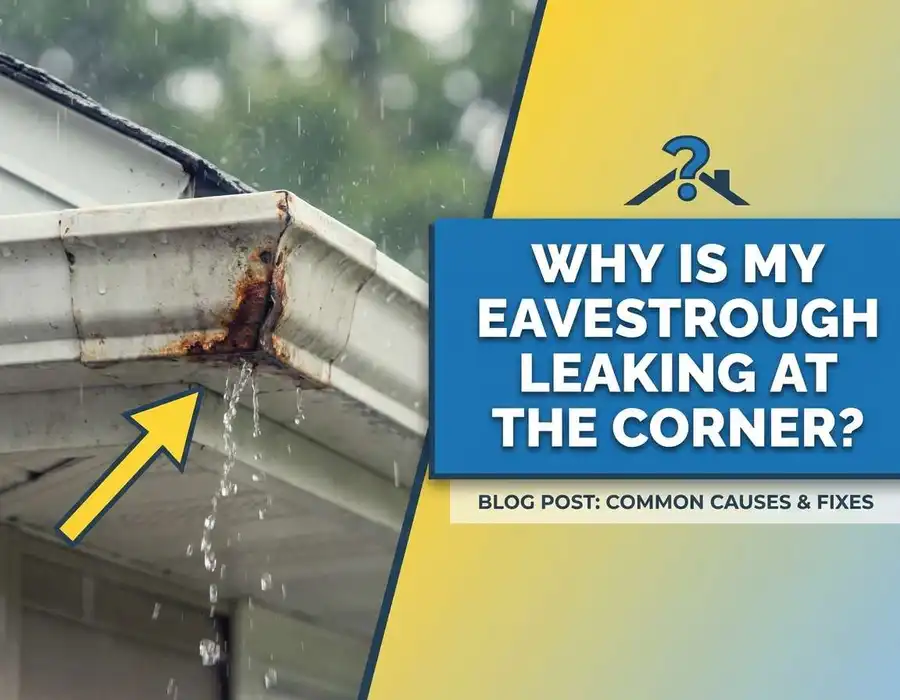
An eavestrough usually leaks at the corner because the corner joint has failed, the sealant has cracked, the gutter is clogged, or water is pooling instead of draining. In Barrie homes, ice, snow, roof runoff, and freeze-thaw cycles can make small corner gaps turn into steady leaks fast — which is why corner leaks are one of the most common calls our eavestrough repair crew handles.
Why Corner Leaks Are So Common
Corners are the weakest points in most eavestrough systems. A straight run of gutter carries water in one direction. A corner has to change that flow, hold two sections together, and stay sealed while the metal expands, shrinks, and moves through the seasons.
That joint carries more stress than it looks. During a heavy rain, water can rush into the corner from two roof slopes at once. In winter, trapped water can freeze inside the seam. As ice expands, it pushes the joint apart. After this happens enough times, the seal breaks and water finds the gap.
An eavestrough corner is the angled piece that connects two gutter runs around the edge of your roof. It may be an inside corner, where two roof edges meet inward, or an outside corner, where the gutter wraps around the outer edge of the home. Both types can leak, but inside corners often deal with more roof runoff.
For homeowners in Barrie and Simcoe County, corner leaks are often tied to local weather. Snow loads, spring melt, wind-driven rain, maple leaves, pine needles, and ice buildup all place extra pressure on the gutter system. A leak that looks minor in July can become a bigger issue by March if water freezes inside the joint.
The Most Likely Reason: Failed Corner Sealant
Most leaking eavestrough corners start with old or broken sealant. Sealant is the waterproof material placed inside the joint to stop water from passing through the seam. Over time, it dries out, cracks, shrinks, or pulls away from the metal.
This happens because gutters move. Aluminum expands in heat and contracts in cold. The movement is small, but the corner joint feels it every season. A thin bead of sealant that once looked solid may split after years of sun, ice, and water pressure.
You may see a failed seal if water drips from the bottom of the corner during rain. Sometimes the leak appears as a thin line rather than a steady stream. The outside of the corner may look fine, but the inside seam may be open.
A quick patch over the outside rarely solves the problem. Water travels inside the joint, so the repair must happen where the water is entering. That means the inside of the corner has to be cleaned, dried, and resealed with the right gutter sealant.
Clogged Eavestroughs Can Force Water Through the Corner
A corner leak does not always mean the corner itself is broken. Sometimes the real cause is a clog nearby. Leaves, shingle grit, twigs, pine needles, and roof debris can block water from moving toward the downspout.
Once water backs up, it sits inside the eavestrough. That standing water raises the pressure on every seam. The corner becomes the easy escape point because it already has a joint. Instead of flowing to the downspout, water leaks through the seam, spills over the front, or runs behind the gutter.
A clog is a blockage that stops water from draining through the gutter and downspout. In an eavestrough system, even a partial clog can cause trouble because rainwater needs a clear path from the roof edge to the ground.
In Barrie, clogged gutters are common in fall and early spring. Leaves collect before winter. Snow packs them down. Then spring melt turns the debris into a heavy, wet mass. If the downspout is also blocked near the elbow, the corner may leak even if the sealant is still in decent shape.
Signs of a clog include water overflowing from the top edge, plants or moss growing in the gutter, dirty streaks under the corner, and a downspout that stays quiet during rain. A working downspout should move water during a storm. If the roof is wet but the downspout is dry, water is trapped somewhere.
Poor Slope Can Make Water Sit at the Corner
Eavestroughs need a slight slope so water can move toward the downspout. If the slope is wrong, water may pool at the corner. This standing water slowly breaks down the seal and increases the chance of leaks.
Slope is the gentle angle that guides water through the gutter. A gutter may look level from the ground, but it should still tilt slightly toward the downspout. Without that tilt, water loses speed and sits in low spots.
A corner can become a low spot for several reasons. Fasteners may loosen. Fascia boards may shift or rot. Heavy ice may pull the gutter down. A ladder may bend the run. Once the corner drops, water collects there after every rain.
This type of leak often shows up after the rain stops. During the storm, the gutter may seem normal. Hours later, the corner still drips. That delayed dripping means water is trapped inside instead of draining away.
The fix depends on the cause. If the gutter is still in good shape, it may only need to be re-pitched and secured. If the metal has bent or the fascia behind it is soft, the repair may need more work.
Loose Fasteners Can Open the Corner Joint
Eavestrough corners depend on support. If hangers, screws, spikes, or brackets loosen, the gutter can sag. Even a small sag near the corner can pull the joint apart.
Fasteners are the parts that hold the eavestrough to the fascia board. They keep the gutter at the right height, angle, and distance from the roof edge. When fasteners fail, the gutter starts to move under the weight of water, ice, and debris.
A loose corner may leak only during heavy rain because the water weight pulls it down. You may also notice the gutter face dipping, a gap behind the eavestrough, or screws backing out of the fascia. Once the gap is wide enough, it stops being a corner leak and becomes water running behind the eavestrough along the whole section, which is a bigger repair.
This problem should not be ignored. Once the gutter pulls away from the home, water can run behind it. That can soak the fascia, drip onto the soffit, or stain the siding. Over time, moisture near the roof edge can lead to wood damage.
In older Barrie homes, this issue may be more serious if the fascia board has already softened. A new screw will not hold well in weak wood. The support surface has to be solid before the corner can stay sealed.
Ice Can Break a Corner Open
Winter is hard on eavestrough corners. If water stays in the gutter and freezes, the ice expands. That pressure can stretch seams, split sealant, and bend the corner piece.
Ice damage often starts before you notice the leak. In late winter, snow on the roof melts during the day and refreezes at night. The gutter catches the meltwater. If the downspout is frozen or blocked, water sits at the corner and turns to ice.
As the ice grows, it acts like a wedge. It pushes against the joint from inside. Sealant is made to stop water, not to hold back expanding ice. Once the seal cracks, spring rain exposes the leak.
Ice can also add weight. A gutter full of ice is much heavier than one full of rainwater. The corner may drop, twist, or pull away from the fascia. After the ice melts, the gutter may look almost normal from the ground, but the joint may no longer line up.
This is why fall cleaning matters in Barrie. Clear gutters help water leave before freezing. Good drainage does not remove every winter risk, but it lowers the chance of ice sitting inside the corner.
The Corner Piece May Be Damaged or Poorly Installed
Sometimes the corner leaks because the corner fitting itself is damaged. The metal may be cracked, dented, bent, or poorly joined. This can happen after ladder impact, falling branches, ice movement, or past repair work.
A factory-made corner usually has seams that need sealant. A hand-cut corner may have more joints and more places for water to escape. If the pieces were not overlapped the right way, water can push into the seam instead of flowing past it.
Installation quality matters because water follows the path of least resistance. If the joint faces the wrong direction, has too little overlap, or was sealed over dirt, it may fail early. A corner that has leaked since the gutter was installed often points to poor fitting rather than age.
Look for uneven metal, gaps at the seam, old layers of caulking, screws placed through water channels, or a corner that does not line up with the straight gutter runs. These clues suggest the issue is not just old sealant.
A damaged corner may need replacement instead of another patch. Resealing works best when the metal is sound and the joint still fits tightly.
Water May Be Overshooting the Gutter at the Corner
A leak at the corner may not come from the seam at all. Water can overshoot the eavestrough and splash down near the corner, making it look like the gutter is leaking.
This often happens under a roof valley. A valley is where two roof slopes meet and send water down one channel. During heavy rain, a valley can send a large amount of water toward one small part of the gutter. If the flow is too fast, it shoots past the edge.
In this case, the corner may drip, splash, or stain the siding below, but the seam may still be sealed. You may see water jumping over the front of the gutter during a storm. This is common during strong rain after snowmelt or during summer downpours.
The solution may be a splash guard, a larger outlet, a better downspout location, or improved gutter sizing. Sealing the corner will not solve overshooting because the water never entered the gutter properly.
This is an important difference. A seam leak needs sealing. An overflow problem needs better flow control.
How to Check the Cause Safely
The best time to inspect a leaking corner is during light rain from the ground. Watch how the water behaves. Where the water appears tells you a lot.
If water drips from the bottom seam, the joint likely needs resealing. If water pours over the top, check for clogs or poor slope. If water runs behind the gutter, the eavestrough may be loose or the roof edge may not be draining into it. If water shoots over the front, the roof runoff may be too strong for that corner.
Do not climb a ladder during rain, wind, snow, or ice. Wet ladders and slick ground are not worth the risk. A phone video from the ground can help you record the leak and inspect it later.
After the weather clears, look for simple signs. Check for leaves near the corner, dark streaks on the siding, pulled fasteners, gaps at the joint, or a corner that sits lower than the rest of the run. A garden hose can help test flow, but use low pressure. High pressure can create problems that do not happen during normal rain.
If the leak only happens during heavy storms, the issue may be flow volume, not a broken seam. If it happens every time water reaches that corner, the seam is more likely the cause.
Can You Fix a Leaking Eavestrough Corner Yourself?
Some corner leaks can be fixed by a careful homeowner. The repair is more likely to work if the gutter is easy to reach, the metal is not bent, the fascia is solid, and the leak is only from old sealant.
A proper reseal starts with cleaning. Old sealant, dirt, and loose debris must be removed from inside the corner. The surface has to be dry before new sealant goes on. If moisture is trapped under the sealant, it can fail early.
Use gutter sealant made for exterior metal and water exposure. General indoor caulking is not the right product. It may crack, peel, or fail after weather changes. Apply the sealant inside the seam, press it into the joint, and cover the full leak path.
Do not build thick layers over dirty old caulking. More product does not mean a better seal. A clean, tight repair lasts longer than a messy patch.
DIY repair is not a good choice if the corner is high, near power lines, above uneven ground, or hard to access. It is also risky if the gutter has pulled away from the home or the wood behind it feels soft.
When a Corner Leak Needs a Professional
Call a professional if the leak comes back after resealing, the gutter sags, water runs behind the eavestrough, or the corner is bent. These signs often mean the system has a support or drainage problem, not just a small seam gap.
A pro can check the slope, fasteners, fascia, downspouts, and roof runoff pattern together. This matters because corner leaks often have more than one cause. A clog may have started the leak, but loose hangers may now keep it from sealing. Ice may have cracked the joint, but poor slope may keep water sitting there.
For Barrie homeowners, a professional inspection is also useful before winter. A weak corner can turn into a bigger issue once snow and ice add weight. Fixing the joint before freeze-up helps protect fascia boards, soffits, siding, walkways, and foundation areas below. For a sense of typical pricing, our eavestrough repair cost guide breaks down corner repairs alongside other common jobs.
Professional repair may include resealing the corner, replacing the corner piece, adding hangers, correcting slope, clearing downspouts, installing a splash guard, or replacing a damaged gutter section. The right repair depends on why the water is leaking.
What Happens If You Ignore the Leak?
A leaking eavestrough corner can damage more than the gutter. Water that falls in the same place over and over can wash out soil, stain brick, rot wood trim, soak siding, and create slippery ice patches in winter.
The biggest risk is water landing too close to the foundation. Eavestroughs are meant to move roof water away from the home. If a corner leak dumps water beside the wall, that water can collect near the basement or crawl space.
In winter, the same drip can freeze on steps, driveways, and walkways. A small corner leak can become a safety problem after one cold night. This is common in Ontario because daytime melt and nighttime freezing can happen in the same week.
Moisture can also attract pests or support mold growth in hidden areas if it reaches wood and stays there. One leak does not mean major damage has already happened, but steady water in the wrong place is never harmless.
How to Prevent Corner Leaks in Barrie Homes
Prevention starts with clear drainage. Clean your eavestroughs in fall after most leaves have dropped and again in spring after winter debris has washed down. Homes near mature trees may need extra cleaning.
Check downspouts, not just the gutter trough. Many corner leaks begin because water cannot leave the system. Elbows near the ground clog easily. If water backs up there, it can affect the corner even if the trough looks clean.
Keep an eye on slope. After winter, look for sections that sag or hold water. A simple clue is dripping long after the rain has stopped. That means water is sitting somewhere.
Trim branches that drop heavy debris onto the roof. Leaves and needles often enter the eavestrough after landing on shingles first. Less roof debris means less gutter buildup.
Make sure downspouts discharge away from the house. If a corner leak has already soaked the ground near the foundation, extending the downspout can reduce the water load in that area while the repair is planned.
Gutter guards may help in some homes, but they do not remove all maintenance. Fine debris, roof grit, and ice can still cause problems. The best setup is one that matches the trees, roof shape, and drainage needs of your property.
Should the Corner Be Repaired or Replaced?
Repair is usually enough when the corner metal is straight, the seam is tight, and the leak comes from cracked sealant. In that case, cleaning and resealing the inside joint can stop the drip.
Replacement makes more sense when the corner is bent, split, rusted, poorly fitted, or patched many times. A corner with several old repair layers may not have a clean surface left for a strong seal. If the joint keeps opening, the gutter may also need better support. Metal that is thinning rather than just leaking at the joint is a different problem — see our guide on small holes and pinhole leaks in aluminum eavestroughs if the drips are coming from the flat run rather than the corner itself.
A full gutter replacement is not always needed. Many leaks can be solved with a new corner piece or a short section repair. But if the whole run is sagging, undersized, or pulling away, fixing only the corner may be a temporary answer — our guide to eavestrough repair vs replacement covers how to make that call.
The smart choice is based on cause, not guesswork. A leaking seam needs sealing. A sagging run needs support. A poor slope needs adjustment. A damaged corner needs replacement. An overflow problem needs better water control.
Final Answer: Why Your Eavestrough Is Leaking at the Corner
Your eavestrough is leaking at the corner because water is escaping through the weakest part of the system. The most common cause is failed sealant, but clogs, poor slope, loose fasteners, ice damage, bad installation, and heavy roof runoff can all create the same symptom.
For Barrie and Simcoe County homes, corner leaks deserve quick attention because snow, ice, and freeze-thaw cycles can make the gap worse. Watch the leak during rain, note where the water comes from, and check whether the gutter is draining properly.
If the corner is clean, straight, and secure, resealing may fix it. If the gutter sags, overflows, pulls away, or leaks again, the real problem is deeper than the seam. Fix that cause first, and the corner will have a much better chance of staying dry. If you’d rather have a second opinion, request a free repair estimate and we’ll take a look before it gets worse.
Think You Might Need Eavestrough Work?
Get a free, no-obligation assessment for your Barrie home.