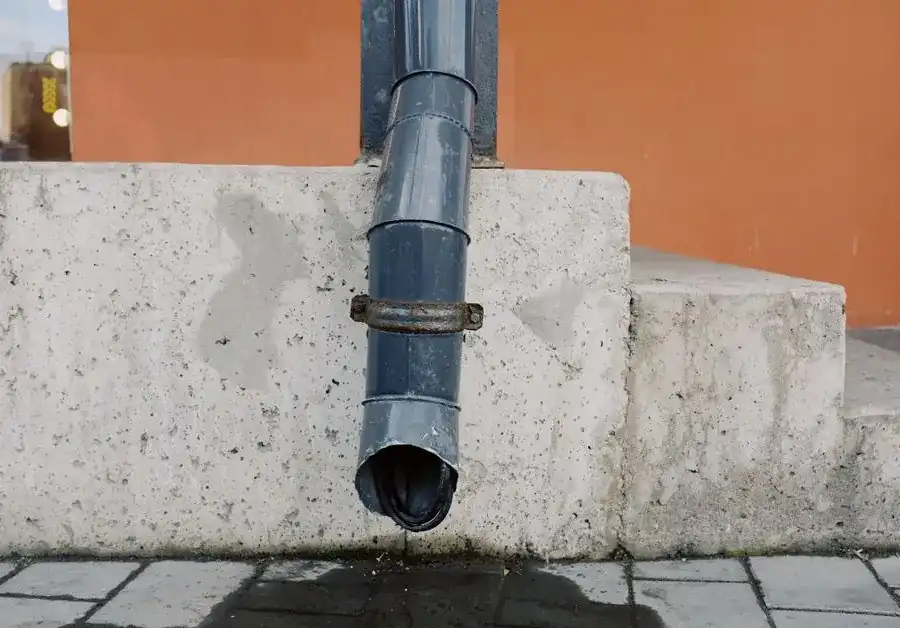

Small holes and pinhole leaks in aluminum eavestroughs often start as tiny drips but can lead to fascia rot, basement moisture, siding stains, and ice buildup. In Barrie and Simcoe County, freeze-thaw weather makes these leaks worse because trapped water expands, weakens metal, and opens small defects over time — which is why we treat pinhole leaks as a full eavestrough repair diagnosis, not just a patch job.
Why Pinhole Leaks Matter More Than They Look
A pinhole leak is a tiny opening in the metal surface of an eavestrough. It may look harmless because the water comes out slowly, but that steady drip can soak the same spot every time it rains.
The main problem is not the hole itself. It is where the water goes. If the leak drips behind the trough, it can wet the fascia board. If it lands near the foundation, it can add water pressure around the basement. If it leaks during winter, it can freeze into thick ice on walkways, steps, or driveways.
Many homeowners in Barrie notice the issue during spring rain or after snowmelt. The trough may look fine from the ground, but water finds the smallest weak point. Once water starts escaping, dirt, corrosion, and movement usually make the hole bigger.
Common Causes of Small Holes in Aluminum Eavestroughs
Aluminum does not rust like steel, but it can still corrode. Corrosion means the metal breaks down after long contact with moisture, salts, acids, or trapped debris. In eavestroughs, this often happens from the inside out.
Wet leaves are one of the most common causes. When leaves, pine needles, roof grit, and mud sit in the trough, they hold moisture against the aluminum. That damp layer can slowly wear down the protective coating. The hole may not show until the metal has already become thin.
Fasteners can also cause leaks. Screws, spikes, brackets, and seams create stress points. When the eavestrough shifts during wind, snow load, or ice buildup, small cracks can form around these areas. The hole may start beside a screw or near a corner where the metal flexes — a different failure mode than a leaking corner joint, since here the metal itself is thinning rather than the sealant failing.
Another cause is poor drainage slope. An eavestrough needs a slight pitch toward the downspout. If it sags, water pools in one section. Standing water adds weight, attracts debris, and speeds up surface damage.
Why Barrie Weather Makes Pinhole Leaks Worse
Barrie homes deal with snow, ice, rain, wind, and fast temperature swings. That matters because aluminum expands and contracts as the temperature changes. This movement is normal, but it can weaken old sealant, seams, corners, and thin spots in the trough.
Freeze-thaw cycles are especially hard on small holes. A freeze-thaw cycle happens when water freezes, melts, and freezes again. Water expands when it turns to ice. If water sits inside a small opening, the ice can push the hole wider. Our guide to snow and ice damage to eavestroughs covers this same mechanism at a system-wide level.
Lake-effect snow and heavy winter buildup can also add stress. Packed snow on the roof melts during the day, runs into the trough, then freezes again at night. If the downspout is blocked, the water has nowhere to go. The eavestrough becomes a long ice tray, and weak spots are exposed to pressure again and again.
This is why a small summer drip can become a visible winter leak. The hole may not fail all at once. It grows through repeated stress.
Signs Your Aluminum Eavestrough Has Pinhole Leaks
The clearest sign is water dripping from the bottom of the trough instead of flowing to the downspout. During light rain, the drip may be slow. During heavy rain, it may turn into a small stream.
Look for dark vertical stains on siding, brick, or fascia. These marks often show where water has been running for weeks or months. You may also see green algae, peeling paint, swollen wood, or soft fascia near the leak.
On the ground, watch for washed-out mulch, small trenches in soil, splash marks on windows, or damp patches near the foundation. These signs tell you water is escaping in the wrong place.
In winter, pinhole leaks may show as hanging icicles under one part of the trough. Icicles do not always mean the eavestrough has a hole, but if they form in one repeated spot, the trough should be checked.
How to Check for Small Holes Safely
The safest first check is from the ground. Walk around the home during or right after rain. Look for drips under the eavestrough, water marks on siding, and places where water falls close to the foundation.
You can also check after the weather clears. From the ground, look for sagging sections, separated seams, loose downspouts, or corners with stains. A small leak often leaves a clear trail.
A water test can help confirm the leak. This means running water through the trough and watching where it escapes. The important part is safety. Ladders on wet ground, uneven soil, or icy surfaces can be dangerous. For many homeowners, it is safer to have a gutter repair professional inspect the trough, especially on two-storey homes.
Do not ignore hidden leaks behind the eavestrough. If water runs between the trough and fascia, the problem may be loose hangers, bad slope, or a failing back seam. That type of leak can damage wood before you see much water from the ground.
Can Pinhole Leaks Be Repaired?
Yes, some pinhole leaks in aluminum eavestroughs can be repaired. The repair depends on the size of the hole, the age of the trough, the number of leaks, and the condition of the metal around the damaged area.
A patch works best when the surrounding aluminum is still strong. The area must be cleaned, dried, and sealed with the right outdoor gutter sealant. For larger weak spots, a small metal patch may be placed over the hole and sealed around the edges.
Sealant is a waterproof material used to close gaps, seams, and small holes. In eavestrough work, it must stay flexible because metal moves with heat and cold. A sealant that becomes hard and brittle may crack during winter.
Repairs are less reliable when the aluminum is thin, chalky, pitted, or full of hidden corrosion. If one pinhole is visible but the nearby metal feels weak, more leaks may appear after the first one is fixed.
When Repair Is Worth It
Repair is usually worth considering when the eavestrough is fairly new, the leak is isolated, the trough has good slope, and the downspout drains well. In this case, the hole may be caused by one scratch, one fastener point, or one small damaged area.
Repair also makes sense when the leak is at a seam or corner and the rest of the system is in good shape. Many corner leaks come from failed sealant rather than failed metal. Resealing the joint may solve the problem.
A small repair can also be a good short-term fix before winter. If water is dripping onto a walkway, driveway, or entry step, sealing the leak can reduce ice hazards while you plan a longer-term solution.
The key question is simple: is the leak a small defect, or is it a sign the whole trough is wearing out? A single hole is a repair issue. Many holes are a system issue.
When Replacement Is the Smarter Choice
Replacement may be better if there are several pinhole leaks in the same run. Multiple holes often mean the inside coating has worn down, the metal has thinned, or debris has been sitting in the trough for years.
Replacement is also smarter when the eavestrough sags, pulls away from the fascia, overflows often, or has repeated ice buildup. Fixing one hole will not solve poor drainage. Water will keep pooling, and new leaks may form. If you’re weighing the two options against each other, our full repair vs replacement guide walks through the decision in detail.
Old sectional eavestroughs may leak at several joints. A joint is where two pieces meet. Every joint is a possible failure point because sealant can shrink, crack, or pull away. Seamless aluminum eavestroughs reduce this risk because each long run has fewer connection points.
For Barrie homes with mature trees, steep roofs, or heavy winter exposure, replacing weak troughs with properly sized, well-sloped aluminum can prevent repeated service calls.
Why Water Pooling Creates More Holes
Water pooling is one of the biggest warning signs. An eavestrough should move water, not store it. When water sits in one area, it traps grit, roof granules, leaf acids, and dirt against the metal.
That mix slowly wears the surface. Roof granules act like sandpaper. Organic debris can hold acidic moisture. Ice adds pressure. Together, these forces attack the same low spot until the aluminum becomes thin.
Pooling also adds weight. A full trough can pull hangers loose and create deeper sagging. More sagging creates more pooling. This cycle keeps feeding itself until the trough leaks, bends, or separates from the home.
A hole repair without slope correction is incomplete. The drip may stop for a while, but the cause remains.
The Role of Downspouts in Pinhole Leaks
Downspouts do more than carry water down. They control how fast the eavestrough can empty. If the downspout is clogged, undersized, crushed, or poorly placed, water backs up inside the trough.
Backed-up water raises the waterline. It can reach seams, screw holes, end caps, and weak spots that normally stay dry. During a storm, this can make several areas leak at once.
In winter, blocked downspouts are even worse. Meltwater enters the trough, reaches the blockage, and freezes. Once ice fills the lower section, more water collects above it. The trough becomes heavy, and small holes may open under the stress.
A good repair should include a downspout check. If the water cannot leave the system, the eavestrough will keep failing.
How Small Leaks Affect Fascia, Soffit, and Siding
The fascia is the board behind the eavestrough. It supports the trough and helps protect the roof edge. When a pinhole leak drips backward or behind the trough, the fascia can stay wet for long periods.
Wet fascia may soften, swell, or rot. Once the board weakens, the hangers can loosen. Then the trough sags, which creates more drainage problems.
The soffit is the underside of the roof overhang. If water travels into this area, it can stain panels, affect ventilation, or attract pests. Moist wood and hidden gaps can become entry points for insects or small animals.
Siding can also suffer. Repeated water flow can leave stains, grow algae, loosen paint, or push moisture into small gaps around trim. A tiny eavestrough leak can spread damage across several parts of the roof edge.
Basement and Foundation Risks
A pinhole leak near the foundation should be taken seriously. One small drip may not flood a basement, but repeated water near the same wall can raise soil moisture. Wet soil pushes against foundation walls and can find cracks, gaps, or weak spots.
This matters more during spring thaw. Snow melts, rain arrives, and the ground may already be saturated. If the eavestrough leaks close to the house, it adds water where drainage is already under stress.
Good eavestroughs move roof water away from the home. That is their main job. Even a small hole reduces that protection because water escapes before it reaches the downspout extension.
Homeowners often look for big problems first, such as missing downspouts or overflowing troughs. Small leaks can be just as harmful when they drip in the wrong place for a full season.
DIY Repair vs Professional Repair
A simple pinhole repair may look easy, but the success depends on surface prep, dry conditions, proper sealant, and correct diagnosis. If the metal is dirty, wet, oily, or loose, the patch may fail quickly.
DIY repair is best suited for a low, easy-to-reach section where the hole is visible and the trough is otherwise solid. The surface must be cleaned well, dried fully, and sealed with a product made for exterior gutter use.
Professional repair is a better choice when the leak is high, near a corner, behind the trough, or part of a larger drainage problem. A contractor can check slope, hangers, seams, downspouts, fascia condition, and nearby weak spots.
The biggest difference is diagnosis. A homeowner may seal the visible hole. A professional should find out why the hole formed and whether more failures are likely.
How to Prevent New Pinhole Leaks
Clean the eavestroughs before debris has time to sit and decay. In Barrie, many homes benefit from cleaning in late spring and again after fall leaves drop. Homes near pine, maple, birch, or heavy tree cover may need more frequent checks.
Keep downspouts clear. Water should flow freely from the roofline to the discharge point. Downspout extensions should move water away from the foundation, not release it beside the wall.
Watch for sagging. A low section that holds water after rain should be corrected. The longer water sits, the more likely the metal is to weaken.
Trim branches that drop leaves and needles directly into the trough. This reduces clogs, roof grit buildup, and wet organic material.
Gutter guards may help in some homes, but they are not a cure for every situation. They work best when matched to the roof type, tree cover, and local debris. A poor guard can trap fine debris or ice, which may create new problems.
What Barrie Homeowners Should Do After Finding a Leak
First, note where the leak is. Is it near a corner, seam, downspout, hanger, or open middle section? The location helps explain the cause.
Second, look at the ground below. If water is landing near the foundation, garden bed, walkway, or driveway, the leak should be handled sooner. Water near the basement or ice on walking areas raises the risk.
Third, check whether the trough is draining. After rain, water should not sit in one section for long. Standing water means the issue is bigger than a small hole.
Fourth, decide whether the system looks isolated or worn out. One clean hole in strong metal can often be repaired. Several holes, sagging runs, stains, and repeated overflow point toward replacement.
Repair Cost Factors
The cost of fixing pinhole leaks depends on access, height, damage level, and whether the leak is part of a bigger drainage issue. A single low leak is usually simpler than a second-storey corner leak over a sloped driveway. Our eavestrough repair cost guide for Barrie has typical pricing for this and other common repairs.
The number of leaks matters. Repairing one or two small holes may be practical. Chasing many leaks along an old trough can waste money because new holes may keep appearing.
Fascia condition also affects the job. If the wood behind the eavestrough is soft or rotten, the trough may need to be removed so the board can be repaired. Reattaching new or repaired eavestroughs to weak fascia will not hold well.
Downspout changes, added outlets, improved slope, or new hangers can also change the scope. These fixes may cost more upfront but prevent the same leak from returning.
Choosing the Right Long-Term Fix
The best fix depends on the cause. If the problem is a tiny puncture in strong aluminum, sealing and patching may be enough. If the cause is pooling water, the slope must be corrected. If the cause is old, thin metal, replacement is the better answer.
For many Barrie and Simcoe County homes, the right solution is a full system view. The eavestrough, downspouts, fascia, roof edge, and ground drainage all work together. A hole in one spot may reveal stress somewhere else.
Think of the eavestrough as a water path. Water should enter, flow, drop through the downspout, and move away from the house. Any break in that path can cause damage.
A lasting repair does more than stop the drip. It restores the path.
Final Thoughts
Small holes and pinhole leaks in aluminum eavestroughs should not be ignored. They often point to trapped debris, standing water, worn sealant, weak metal, or winter stress. In Barrie, freeze-thaw weather can turn a minor leak into a larger repair if water keeps sitting in the trough.
The smart move is to check the cause before choosing a fix. Repair isolated holes when the metal is sound. Replace sections that show repeated leaks, sagging, corrosion, or poor drainage. A well-working eavestrough system protects the fascia, siding, foundation, and walkways from water damage all year. Request a free repair estimate and we’ll tell you whether it’s a patch or a replacement.
Think You Might Need Eavestrough Work?
Get a free, no-obligation assessment for your Barrie home.